
 Carlos Solis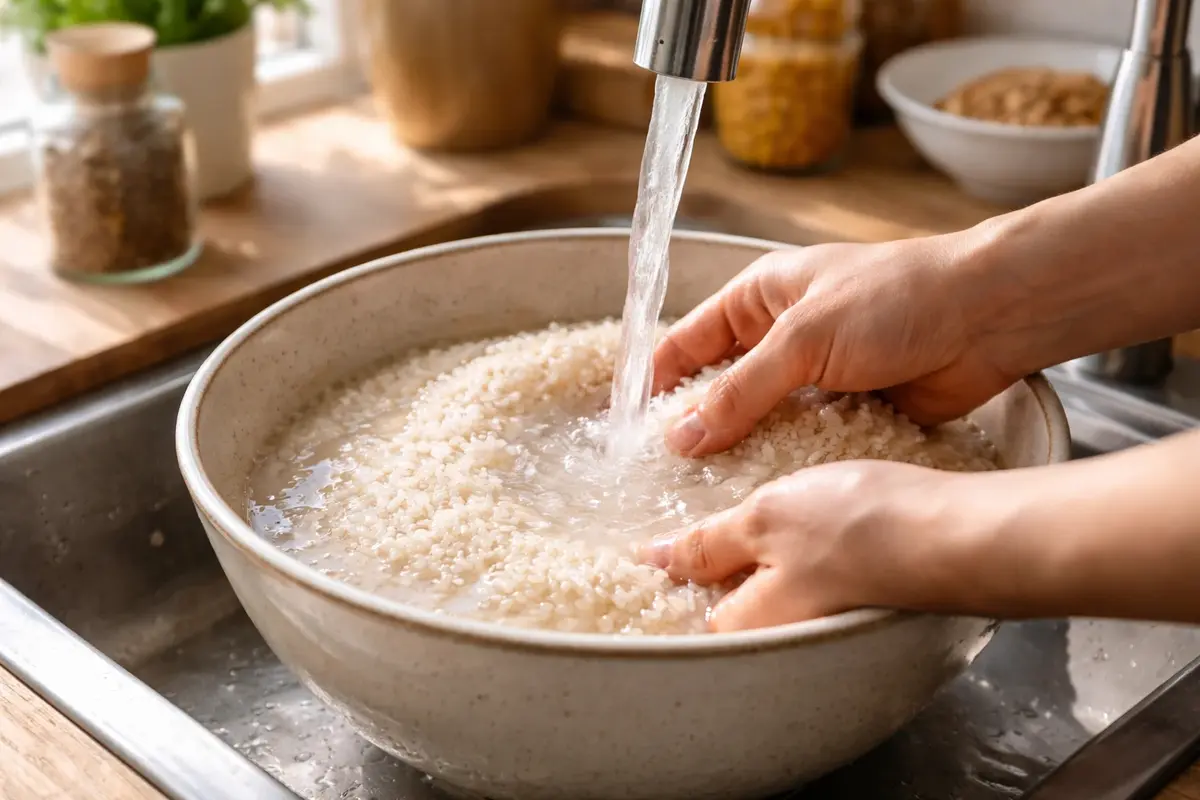
When you rinse raw rice, the water turns pale and milky. That cloudy water comes from a layer of surface starch left on the grains after harvest and milling. Washing removes some of that starch, which is why the rinse water looks cloudy.
Does rinsing change the texture of cooked rice?
Early work suggested that washing away surface starch would make rice less sticky. A 2017 study put that idea forward.
Later research tells a different story. Nutrition expert Evangeline Mantzioris at the University of Adelaide explains that stickiness in cooked rice depends not on surface starch or amylose, but on a different starch inside the grain called amylopectin. Amylopectin is released from the grain during cooking and determines how sticky the rice becomes.
In 2019 researchers tested 10-gram samples of three rice varieties. They rinsed each sample the same way, varied the rinse water volume, and cooked the rice for 30 minutes. The test showed that the amount of amylopectin released during cooking did not depend on whether the rice was rinsed beforehand. In short, the main factor is the rice variety. Choose glutinous (sticky) rice when you want very sticky results; medium-grain and jasmine rice are usually less sticky.
Rinsing and safety — dust, arsenic, and microplastic
People traditionally rinsed rice to wash away dust, insects, small stones, and bits of husk. Today, most supermarket rice goes through machine cleaning, drying, dehusking, polishing, sorting, and packaging under strict standards. The drying step in processing lowers moisture and helps prevent microbial growth during storage. Because of that processing, rinsing is usually unnecessary for safety for most shoppers.
Still, some rice can contain inorganic arsenic that the plant absorbs from soil and water. Rinsing can remove a portion of arsenic ions that sit on the grain surface.
Rinsing also reduces microplastic levels in rice. A 2021 study found that washing before cooking cut plastic contamination by about 20 to 40 percent. Researchers haven’t established the health effects of microplastics, but studies raise concerns.
Nutrient loss
Washing rice reduces the content of some water-soluble trace minerals, including copper, iron, zinc, and vanadium. Rice provides only a small portion of the daily requirement for those elements, so most people will not notice a meaningful nutritional impact from that loss.
Practical tips:
- Rinse rice if you see dust or visible debris, or if you want to reduce microplastics or wash away some surface arsenic.
- For most supermarket rice, one or two gentle rinses before cooking are enough.
- Choose a glutinous (sticky) rice variety when you need especially sticky texture; don’t rely on rinsing to create stickiness.
Based on Live Science
