
 Gaby
Gaby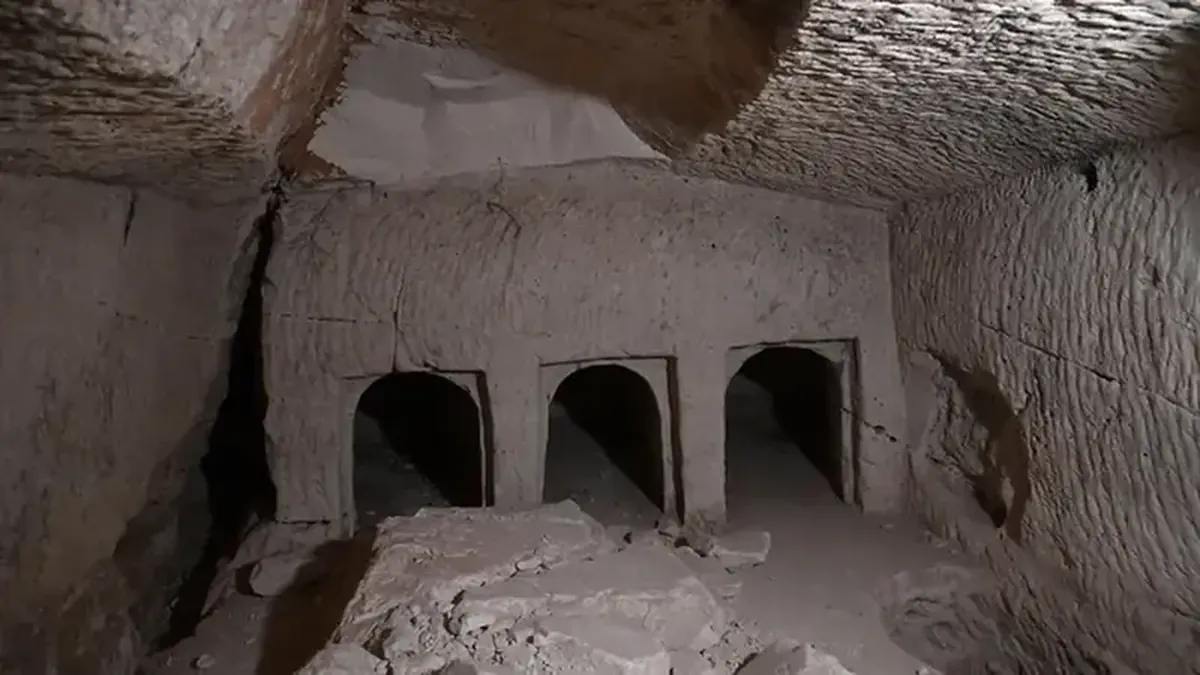
This 2,000-year-old burial cave, located about 30 miles from Jerusalem, was long believed to be the final resting place of a woman named Salome who served as a midwife during the birth of Jesus. The elaborately decorated tomb became a Christian pilgrimage site during the Byzantine era and remained popular until about the 9th century.
New research from archaeologists at the Israel Antiquities Authority (IAA) suggests the cave, once tied to Jesus, may actually be the burial site of a different Salome — possibly the sister of King Herod the Great.
Salome, but Not That One
Researchers point to the tomb’s monumental architecture, ornate decorations, mosaics, carvings, and a spacious courtyard as evidence that someone from a royal family was buried there in the first century B.C. The name Salome was common at the time, and the findings could match a Salome from the Herodian family rather than the midwife reported in later Christian tradition, according to Live Science.
Archaeologist Vladik Lifshitz calls that possibility one of several theories. He and his colleague Nir-Shimson Paran co-authored the new study, which appears in the IAA journal Atiqot.

What Do We Know About Salome’s Cave?
The cave became associated with Salome after archaeologists found an ossuary (a box for bones) inscribed with her name inside. Jerusalem passed from Byzantine to Islamic control in the 7th century, but Christian pilgrims likely continued to visit the cave until the 9th century. Still, the identity of the person actually buried there wasn’t definitively known.
About 40 years ago, tomb raiders stumbled on the site. Archaeologists excavated it in 1984. Today the burial cave is part of a 62-mile trail of Jewish kings, an archaeological route that connects several historical locations.
Among the artifacts recovered were hundreds of clay oil lamps dating to the 8th and 9th centuries. Archaeologists believe pilgrims bought those lamps to light their way through the dark cave.

The team also found the remains of several luxurious villas nearby, suggesting the site once belonged to a very wealthy, possibly royal, family.
Relative of Herod
Herod I, known as Herod the Great, rose to power thanks to his family’s ties with Rome and ruled Judea from about 37 to 4 B.C.
Despite a reputation for cruelty, Herod was a prolific builder: he transformed the Second Temple complex on the Temple Mount and developed what we now call the Western Wall in Jerusalem.
Herod’s sister Salome was an important figure at his court. Historians also point out that a granddaughter named Salome played a significant role in the family later on.
The elder Herodian Salome died around 10 A.D., while the younger Salome died in the 50s or 60s A.D. Which of the two — if either — actually rests in the cave remains unresolved.
