
 Gaby
Gaby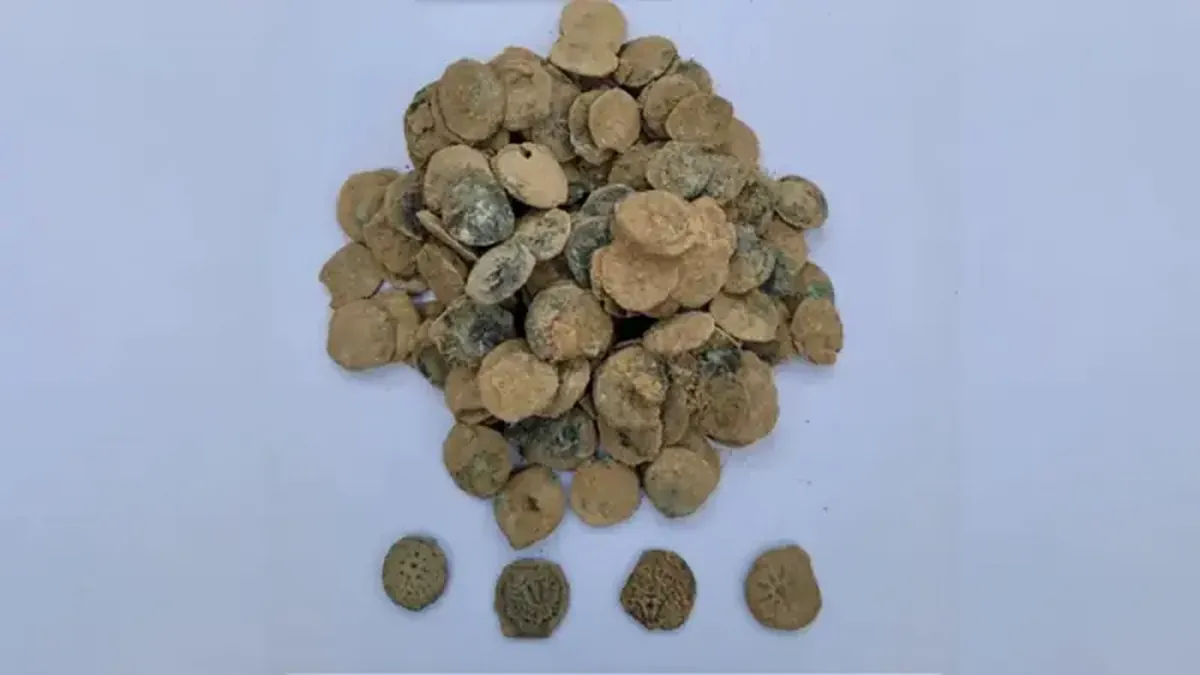
Archaeologists excavating in the Jordan River Valley in Israel uncovered 160 ancient coins. The hoard dates to roughly 2,100 years ago.
The coins date to the reign of Alexander Jannaeus, who served as both high priest and king of Judea from the Hasmonean dynasty. The Hasmonean kingdom was established in 167 B.C. when Jewish inhabitants of the region revolted against the Seleucid Empire and seized part of its territory. In the 1st century B.C., the Roman Republic conquered Hasmonean lands and allowed King Herod to establish his own kingdom there.
What Makes These Finds Special?
The coins bear engraved octagonal stars and inscriptions in Aramaic and Greek. They include the name of Alexander Jannaeus and indicate they were minted in the 25th year of his reign. The University of Haifa says coins of this type were struck around 80–79 B.C.
Shai Bar, the excavation leader, told Live Science that Hasmonean coins rarely appear in large hoards, which makes this discovery unusual.
Bar also noted that the site where the treasure was found was once a resting place for travelers heading to the fortress of Sartaba.

Who and Why Buried the Treasure?
More precisely, the archaeologists found the hoard in a cooking area near a collapsed wall. That context has generated several theories about why the coins were there.
Shai Bar suggested the coins may have been buried during turbulent times in the hope of better days. Alternatively, the hoard might not have been buried at all; it could have been a cash reserve for food merchants. Another possibility is that someone placed the coins in the wall as an offering—though Bar said that practice was rare at the time.
Excavations and analysis are ongoing. The team says it will publish the results of its analysis of the coin hoard later.
