
 Gaby
Gaby
This ancient hybrid is a reliable guardian for winter-weakened health: in spring, oranges can boost vitality without extra medication. What makes the “Chinese apple” so valuable, and how can you get the most from it?
Originating from the Celestial Empire
The orange is the most popular citrus fruit in tropical and subtropical regions worldwide. It has been cultivated in Southeast Asia and China since about 2500 B.C., with the earliest written mention dating to 314 B.C., and botanists believe it has hybrid origins. One theory proposes that the orange is a cross between the mandarin (Citrus reticulata) and the pomelo (Citrus maxima); rather than evolving gradually through cultivation, the orange appears to have emerged already formed from that cross.
Where oranges are grown depends on suitable climate. Today, orange trees thrive not only in their historical homelands but also along the entire Mediterranean coast, and in regions such as South Africa and Central America. Major orange-producing countries include China, India, Pakistan, Iran, Turkey, Egypt, Spain, Italy, Greece, South Africa, and Mexico.

Fascinating Etymology
The word “orange” comes into English via Dutch, where the fruit has two names: appelsien and sinaasappel. The latter, like the German apfelsine, is a calque from the French pomme de Chine (“apple from China”); today the French commonly use the native term orange. The plant—often called the “Chinese apple”—was brought to Europe around 1100 by Portuguese sailors and later introduced to the New World: orange groves were already bearing fruit in northeastern Florida by 1579.
Because this southern “immigrant” needed bright, diffused light and air temperatures between 17 and 28 °C, Europeans developed special glass structures called orangeries (from the French word for orange) to cultivate the trees farther north. The first orangeries appeared in France in the late 16th century as oranges became fashionable among the elite; their purpose was to preserve and grow heat-loving orange trees for noble households.

Beautiful and Edible
You can grow an orange tree from seed at home for decorative purposes: use a 1:1 mix of potting soil and peat. This aromatic plant is rich in essential oils, fills a room with phytoncides, grows vigorously, forms a dense canopy, and is generally easy to cultivate and resistant to disease. Even indoors, an orange tree typically begins to bear fruit in its eighth to tenth year, but it won’t necessarily inherit all the traits of its parent tree; to preserve specific genetics, propagate by cuttings or buy established seedlings.
In home cultivation orange plants may stay the size of a one-meter bush, but in the wild they can grow into 12-meter trees and yield as many as 38,000 fruits in a harvest season. Orange trees live at least as long as people: their average lifespan is about 75 years, with some specimens reaching 150 years. Wild orange trees that grow along roads and in city streets across Mediterranean countries often produce bitter fruit, so fallen oranges are not collected for food. Edible varieties, however, are an important source of income for exporting countries.

Navel on Top
The citrus fruit is technically a hesperidium. Navel orange varieties have a curious anomaly: two fruits develop from one ovary—the main fruit and a smaller, rudimentary one. The smaller fruit sits atop the larger one and is visible through the “navel” opening in the skin. Navel oranges are prized for their sweet taste and are among the most popular varieties in the world. The larger the “navel,” the sweeter the flesh tends to be. Navel varieties are also thornless, which makes harvesting easier.
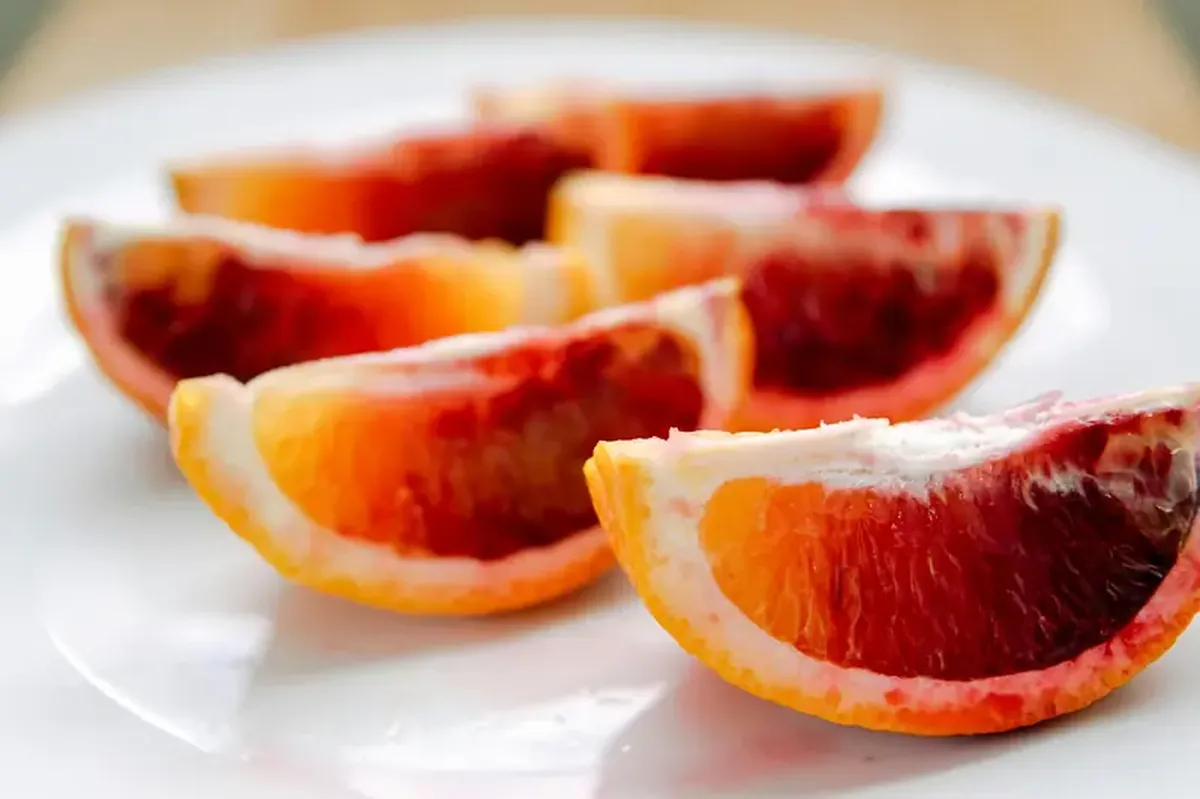
The diversity of orange varieties showcases nature’s creativity: some have unusual appearances, others unique flavors. For example, the Cara Cara navel has ruby-colored flesh. Blood orange varieties contain red pigments that arose through natural mutation and were first discovered in Sicily—that region’s fruits are often called “Sicilian oranges.” This group includes varieties such as Sanguinello, Tarocco, and Moro, the latter known for a raspberry- and berry-like flavor. Sicilian, Genoese, Maltese, and Malaysian oranges are prized for being rich, juicy, and thin-skinned.
Benefits of Oranges
Oranges are valued not only for their taste but also for health benefits. They may help suppress harmful bacteria through antimicrobial effects, lower blood pressure, support cardiovascular health, and aid in managing diabetes, asthma, liver conditions, and some neurodegenerative disorders. Oranges have mild laxative, diuretic, and choleretic effects. The fruit can help strengthen blood vessels and has anti-sclerotic properties. Among plants in the Rutaceae family, oranges stand out for their antioxidant power.
In some orange varieties, anthocyanins provide antioxidant, blood-sugar–lowering, and lipid-lowering effects, which can reduce the risk of certain age-related diseases—particularly cardiovascular and eye conditions such as glaucoma and cataracts. During physical exertion, the flesh and peel may help prevent cellular hypoxia. Orange juice has antibacterial properties and can stimulate macrophage activity. It also appears to blunt vascular inflammation caused by high-fat foods, which is why orange juice is often included in diets for vitamin deficiency and anemia.
Thanks to vitamins and carotenoids, orange juice can lessen some of the harmful effects of alcohol on skin cells. Both juice and peel promote melanin production in the skin. For centuries, oranges have been used to ease coughs and to help remove excess phlegm from the lungs. Folk remedies recommend drinking a decoction or infusion of orange peel—about 5 g of crushed dried peel in 200 g of boiling water—to boost vitality, improve mood, and reduce nausea. “Orange water” has also been used traditionally to reduce heavy menstrual bleeding and to induce sweating for fevers. Eating one orange a day may help prevent or alleviate vitamin deficiencies, scurvy, gum disease, reduce swelling, and stimulate metabolism.

Vitamins, Calories, and Risks
Oranges contain B vitamins, vitamin C, biotin (vitamin H), niacin (PP), and folic acid, and they provide essential minerals the body needs, including magnesium, potassium, iron, zinc, molybdenum, calcium, sodium, and phosphorus. Fresh, natural orange juice is the best choice. To get more juice from the fruit, microwave halved oranges for about 30 seconds at 500 watts to help break down the membranes.
Still, oranges can pose risks for some people. Those with allergies may react to the fruit’s essential oils. Eating too many oranges can cause bloating, heartburn, and stomach pain, so many doctors advise not eating more than three oranges a day. One orange won’t ruin a diet: depending on variety and size, a single orange has up to about 75 calories; 100 g of orange averages roughly 47 calories. Store-bought orange nectar is the least healthy option: it often contains 11–12 g of sugar per 100 g, while freshly squeezed juice contains about 8.9 g of sugar per 100 g.

Culinary Uses
You can extract fragrant oil from the zest. Oranges are excellent in jams and preserves, and they’re used to make candied peel, pastilles, and marmalade. Peel is also used in some mustards served with meat in Italian cuisine: peels are preserved in saltwater, washed, then boiled in a lightly sweet sugar syrup. Oranges pair well with figs, pears, and peaches.

Because the fruit helps break down fats, it’s used in dishes not only with fruit and vegetables but also with meat, poultry, and fish. For a zesty duck with orange sauce, add salt, a pinch of sugar, and chili to fresh orange juice, and thicken the sauce with diluted starch while boiling. Use both the flesh and the zest in sauces and salads. Store fresh oranges for up to two months at about 2 °C with 90% humidity. When refrigerating oranges, don’t pack them in plastic—wrap each fruit in a napkin instead. At room temperature, oranges will keep for about a week.
