
 Gaby
Gaby
Computer engineer Konstantin Borisov of the United States proposes that the biblical Garden of Eden isn’t in Mesopotamia (modern-day Iraq), but beneath the Great Pyramid of Giza in Egypt. He laid out the hypothesis in a study published in the journal Archaeological Discovery.
For centuries, scholars have believed that the Garden of Eden sat at the confluence of the Tigris and Euphrates in Mesopotamia, Arkeonews notes. Borisov reinterpreted ancient maps and historical texts and proposed a different location for the biblical garden where Adam and Eve once lived.
Borisov’s argument rests in part on a map dated around 500 B.C. that depicts four major rivers — the Nile, Tigris, Euphrates, and Indus — originating from a great Ocean that surrounded the world. Borisov argues that the biblical river Gihon corresponds to the Nile. The ancient Jewish historian Josephus Flavius (37–100 A.D.) also believed that Gihon flowed through Egypt and was known to the Greeks as the Nile.
Borisov also analyzed the famous 13th-century map Mappa Mundi, housed in Hereford Cathedral in England. That map places Eden near a river called the Ocean. Borisov argued that the inclusion of the Nile among the rivers flowing from that Ocean on ancient maps makes Egypt a plausible alternative to Mesopotamia as Eden’s location.
Borisov found what he sees as a link between the Great Pyramid at Giza and the biblical Tree of Life. He suggested the pyramid could have stood at the site of the Tree of Life. Referring to a 2012 computer model, Borisov said simulations of charged particles inside the pyramid produced branching patterns radiating from a central point that resemble the Tree of Life.
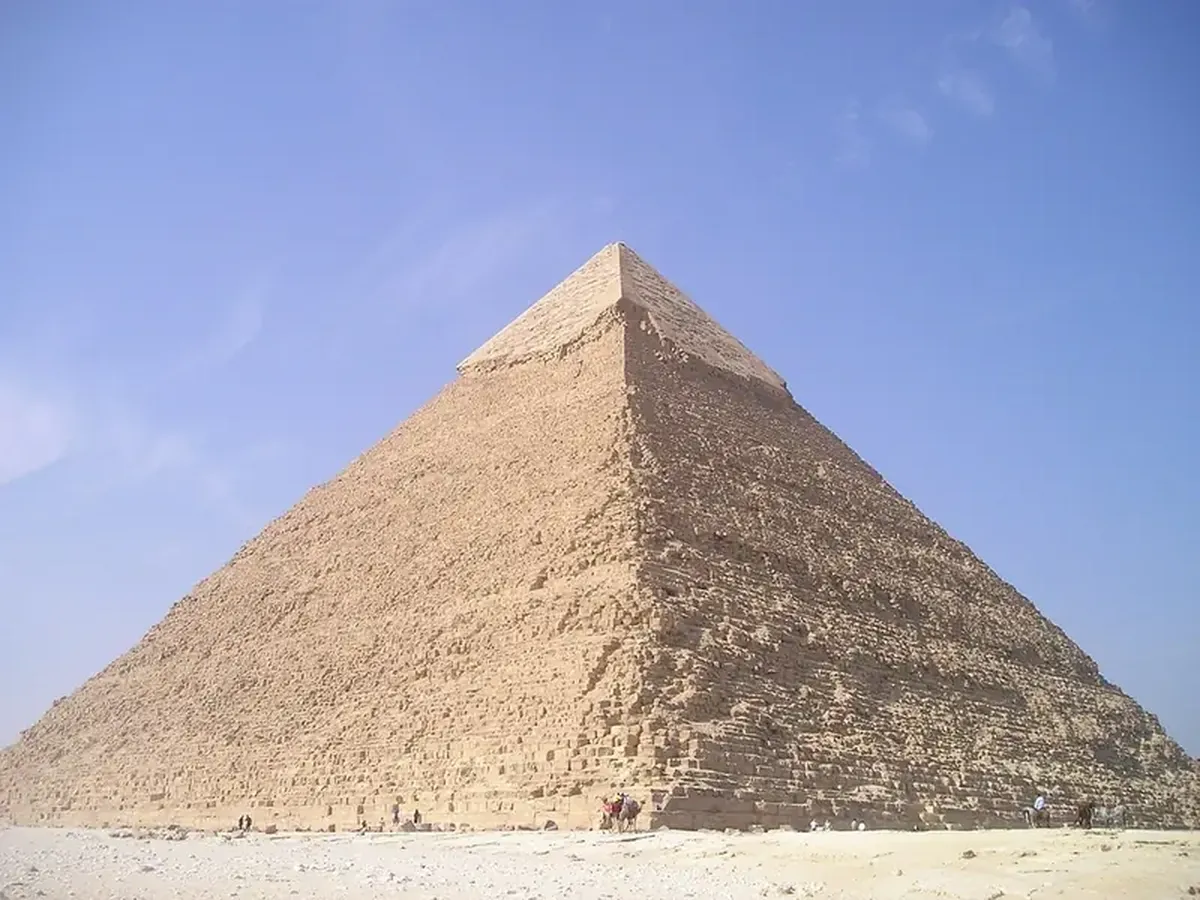
“It’s hard to ignore that the charged particles in this simulation are arranged in such a way that they create several parallel branches extending from a central line, forming a tree-like display,” Borisov said.
He acknowledged that further research is needed to map Eden more accurately. But he said his interdisciplinary approach — combining ancient texts, cartography, mythology, and modern science — already offers a fresh perspective on the age-old mystery.
The theory departs sharply from traditional interpretations. The search for the Garden of Eden has a long and varied history. Scholars have previously proposed many alternative locations for the biblical garden, ranging from Iran and Israel to more unexpected places like Florida and Mongolia. Mormons have placed Eden in Jackson County, Missouri.
