
 Gaby
GabyAn international team has, for the first time in 3,200 years, recreated in detail the “handsome” face of Ancient Egypt’s most powerful ruler.
Researchers from Egypt and Britain used a 3D model of his skull to recreate Ramses II’s face. First they reconstructed how he may have looked at about 90; then they “turned back time” and recreated him at roughly 45, his prime.
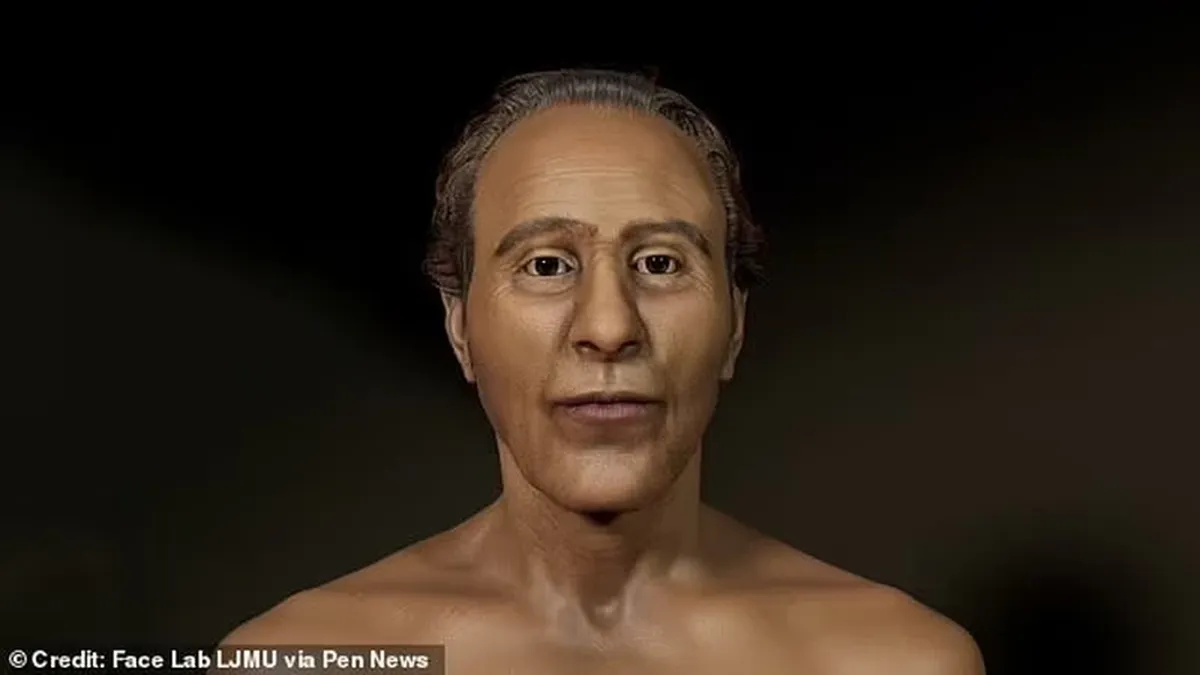
This is what Ramses II may have looked like at 45, according to the reconstruction.
A bit about the pharaoh behind the reconstruction
Ramses II is best remembered for his flair for self-promotion, the colossal statues he commissioned, and an ambitious building program, the Daily Mail reported.
Nineteenth-century Egyptologists dubbed him Ramses the Great. His reign, from 1279 to 1213 BC, marked the last peak of Egypt’s imperial power.
He became pharaoh as the third king of Egypt’s Nineteenth Dynasty at around age 20 (some scholars estimate 25).
During his 67-year reign he probably built more temples and fathered more children than any other pharaoh; chronicles list over 100 descendants from numerous wives and concubines.
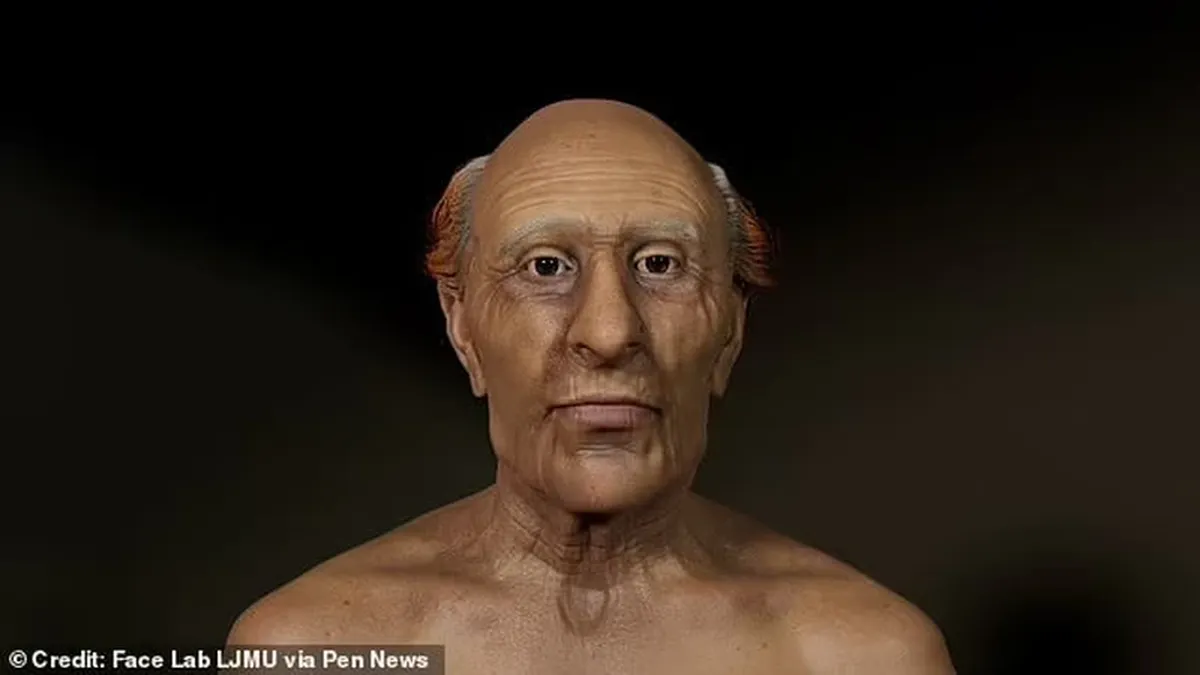
How did they reconstruct the pharaoh’s face?
Professor of Radiology Sahar Salim of Cairo University created a 3D model of Ramses II’s skull. She said the meticulous work revealed a “very handsome” face, with a prominently defined nose and a strong jaw.
Caroline Wilkinson, a professor of anthropology at Liverpool John Moores University, explained their process. Computed tomography of the skull produced a three-dimensional model, and the team compared it to a database of pre-modeled facial anatomy. The hardest part was recreating details—skin, hair, and eye color, plus spots and wrinkles—but some of that information survived in the soft tissues of the mummy. Historical sources also helped identify specific features of the pharaoh’s appearance.
Wilkinson estimates that roughly 70 percent of the reconstructed facial surface has an uncertainty of about 2 mm.
Salim adds that this is the only scientific reconstruction of Ramses II based on CT scans of his actual mummy; earlier attempts were largely artistic. Earlier, archaeologists found the upper part of a magnificent statue of Ramses II.
