
 Carlos Solis
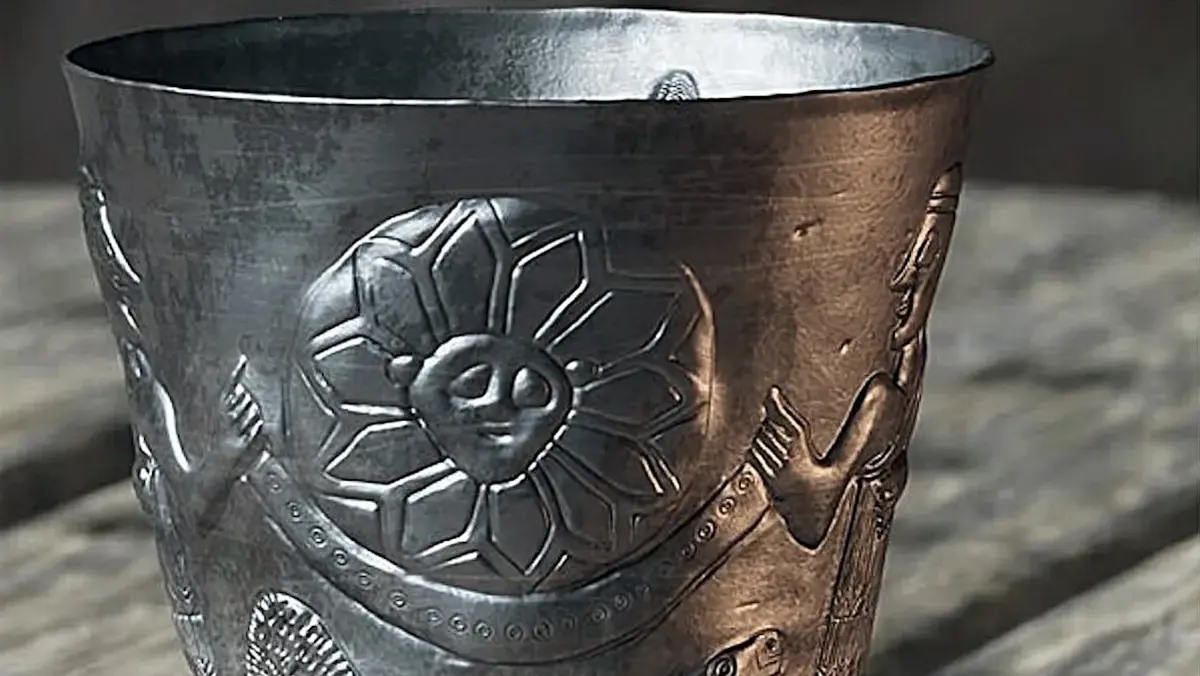 The inscription on a masterfully crafted cup from the Ain Samia necropolis may mean something entirely different than scholars thought, say a team from the University of Zurich and the University of Toronto.
Known in academic circles as the Ain Samia bowl, the cup was discovered by archaeologists in 1970 in a burial site on the West Bank of the Jordan River.
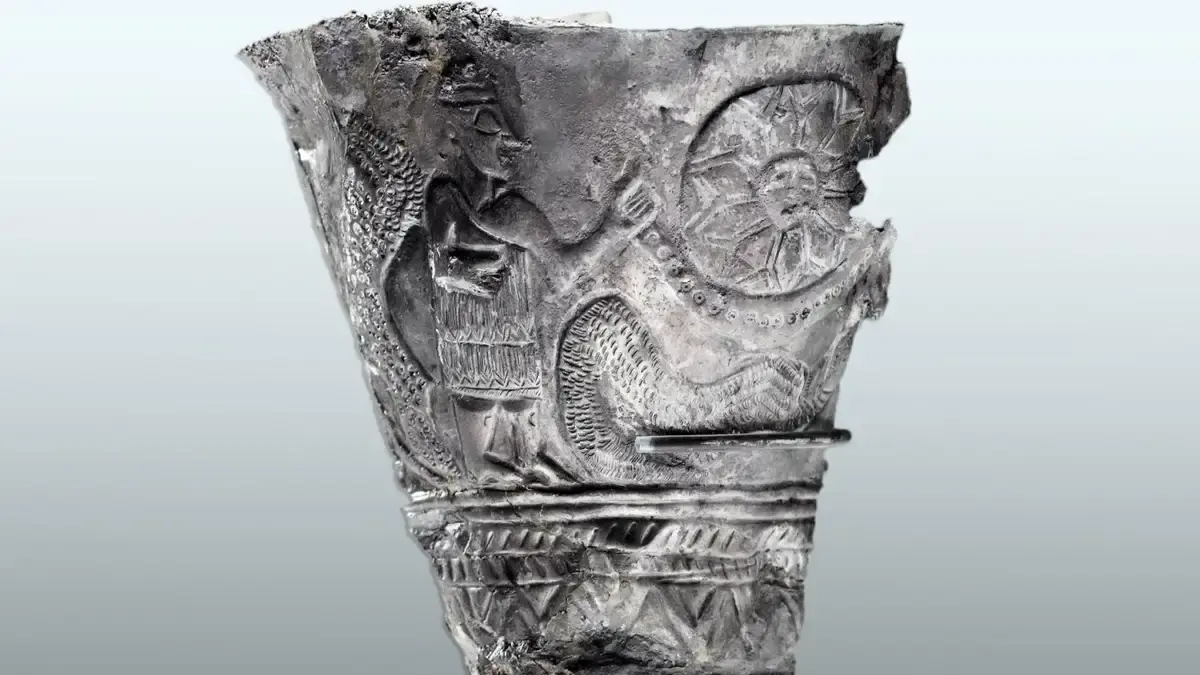
The cup, standing 7.5 cm tall and featuring an intricate half-human, half-creature engraving, has been dated to the Intermediate Bronze Age: 2650–1950 BCE. At that time, the region was inhabited by several nomadic communities.
It is thought the cup was made in southern Mesopotamia about 4,300 years ago. The silver probably came from what is now modern-day Syria or Iraq, The Independent reported.
A New Interpretation of the Engravings
Previously, researchers claimed that the scenes on the cup depict a chaotic world filled with plants, animals, and humans ruled by a serpent. Some archaeologists suggested the cup reflects the Babylonian creation myth Enuma Elish, which tells how the god Marduk defeated a supernatural creature of chaos named Tiamat.
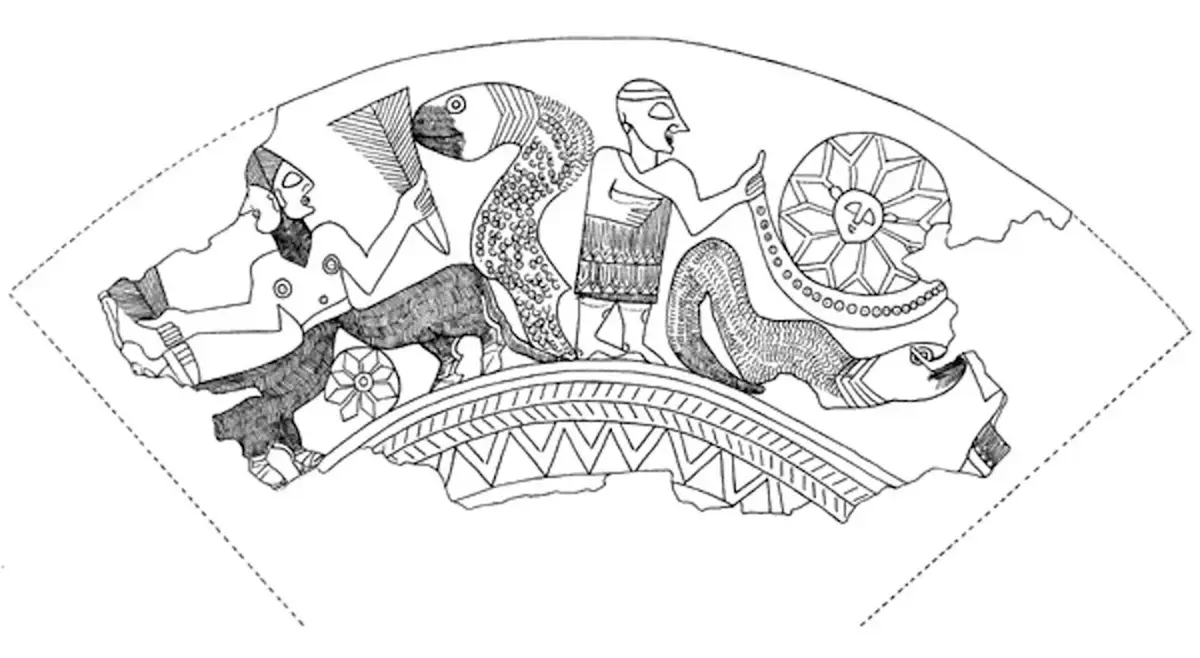
However, authors of a new study in the Journal of the Ancient Near Eastern Society argue that interpretation is incorrect: the cup predates that myth by more than a millennium.
The study suggests the engraving is one of the oldest cosmological images in the world. The artisan captured the origin of the cosmos—the transition of the universe from chaos to order. The rising sun dispels chaos and renews the world.
In this reading, the engraving depicts a time “when heaven and earth, animals and plants were all fused together.” The study suggests the engraving combines elements from various myths and legends across ancient Mesopotamia.
One motif, for instance, shows people holding solar mirrors. This may allude to a depiction of a celestial boat found on 11,500-year-old pottery from the Turkish temple complex Göbekli Tepe.
“There are no scenes from ‘Enuma Elish’ on the Ain Samia cup — it predates the Babylonian creation myth by more than a millennium,” the authors write.
“The scenes depict the transition from chaos to a structured universe, protected from chaos by deities. Special attention is given to the birth of the Sun deity and its subsequent journey through the cosmos,” they write.
