
 Gaby
GabyResearchers have tried to show that the Garden of Eden sat in Mesopotamia and that humanity descends from a common ancestor. According to the Bible, the first man and woman on Earth were Adam and Eve. But to align the Bible with modern science, you have to abandon much of the traditional story—or even ask whether our biblical ancestors were Homo sapiens at all.
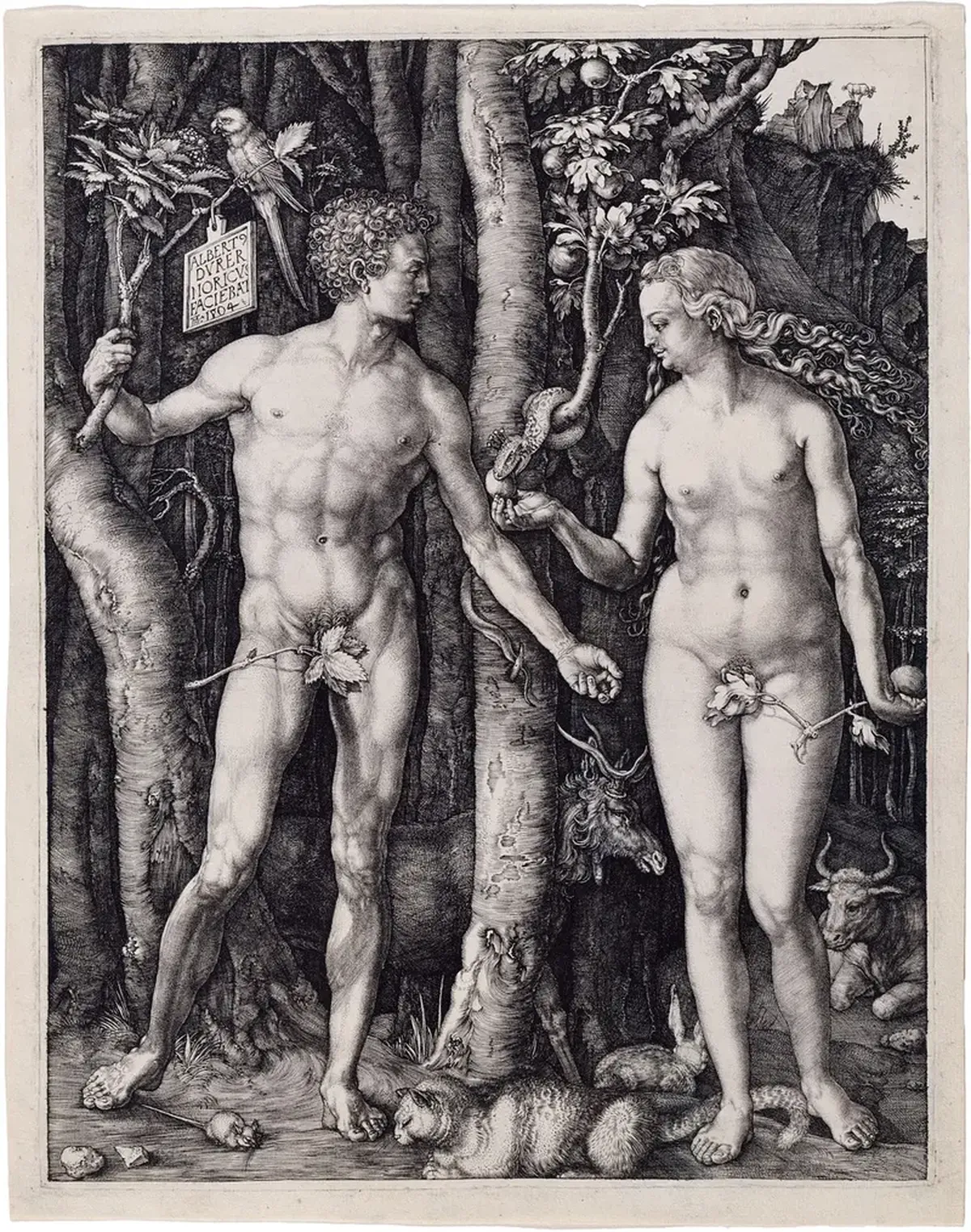
In search of the Garden of Eden
According to the Bible, Adam and Eve lived in the Garden of Eden — a fertile land of abundance. The Bible even gives a relatively specific description of where this garden might have been. In Genesis a river flows out of Eden and splits into four rivers: the Pishon, the Gihon, the Tigris, and the Euphrates. The Tigris and Euphrates are well known and run through modern Iraq; the locations of the lesser-known Gihon and Pishon remain unclear.
Over the years, scholars have proposed many hypotheses about Eden’s location: suggestions have ranged from Iran and Mongolia to Jackson County, Missouri.
Today, many scholars favor the idea that the Garden of Eden was in Mesopotamia. The name Mesopotamia comes from ancient Greek and means “between the rivers” — the Tigris and Euphrates — and covers what is now eastern Syria, northwestern Turkey, and much of Iraq.
Eric Klein, a professor of classical and biblical archaeology at George Washington University, argues that this theory fits both the biblical text and the archaeological record. In his book From Eden to Exile, Klein wrote: “This makes some sense in light of the text, as the biblical narrative not only states that the garden is located ‘in the east,’ meaning east of Israel, but also mentions the Tigris and Euphrates rivers in connection with the Garden of Eden.”

Ruins that are 4,500 years old in Iraq.
There is also a widespread view among scholars that the first plants and animals were domesticated in this region during the Neolithic Revolution, roughly 10,000 to 20,000 years ago. It was here, between the rivers, that people began intentionally cultivating cereal crops. That shift from hunting and gathering to agriculture helped create the first permanent settlements.
As Klein puts it, “this area could also have become a kind of agricultural paradise for the locals after the invention of irrigation in the fourth millennium BC.”
Some striking parallels between the biblical creation account and the region’s ancient myths reinforce the Mesopotamian link. The Babylonian creation epic Enuma Elish, for example, describes heaven and earth arising from a primordial watery chaos — imagery that resembles the Genesis story.

Archaeologists have discovered a Sumerian seal (shown) depicting a man and a woman sitting by a tree in a garden.
Some archaeologists argue the simplest explanation is that the Sumerian myth was handed down across generations until it reached the Israelites by the second century BC.
So it is likely that the biblical story of Adam and Eve reflects an older regional myth about the origins of civilization, the Daily Mail reported.
Genetic Adam and Eve
You might be surprised, but some geneticists really do talk about a single ancestral woman. “Mitochondrial Eve” is the name given to the most recent woman from whom all living humans today inherit their mitochondrial DNA.
Mitochondrial Eve wasn’t necessarily the first human. Other female lineages simply died out and failed to pass on their mitochondrial DNA — the type of genetic material that mothers pass to their children.
By the same logic, scientists have proposed a “Y-chromosomal Adam” — a man whose Y chromosome is the ancestor of the Y chromosomes carried by men today.
Because DNA accumulates mutations at a roughly constant rate, researchers use a “genetic clock” to estimate when people last shared common ancestors.
In 1987, geneticists compared mitochondrial DNA from 147 people around the world. By counting differences and dividing by the mutation rate, they estimated that mitochondrial Eve lived in Africa about 200,000 years ago.
A later study in 2013 that analyzed 1,200 men from Sardinia estimated that the Y-chromosomal Adam lived roughly 180,000 to 200,000 years ago.
Still, most scientists do not interpret these findings to mean humans came from a literal single pair. Adam and Eve could have been just one couple among many people alive at the time. Our most recent common ancestors for different parts of our genome likely lived hundreds or thousands of years apart and almost certainly never met or had children together.
Their special status as “genetic” common ancestors is a consequence of how lineages survive and die out over time, not evidence of supernatural intervention.

Genealogical history
Some scholars, however, say there is a way to reconcile science with the biblical Adam and Eve.
Dr. Joshua Swamidass of the University of Washington argues there is no scientific reason to reject the possibility that humanity descends from a single ancestral pair. The examples of mitochondrial Eve and a Y-chromosomal Adam show that nothing in evolutionary biology rules out the statistical possibility of a common ancestral couple, even if the total population never dropped to just two individuals.
In an article in Perspectives on Science and Christian Faith, Swamidass wrote: “Many people are individual ancestors of all living beings. All living humans descend from each of these common ancestors. The same can be said for everyone who lived in the 1st century AD or for all those who lived at the beginning of written history. Two of them could have been a specific couple referred to in the Scriptures as Adam and Eve, from whom we all descend.”
Swamidass does not offer positive evidence that a historical Adam and Eve existed. Rather, he shows that current evolutionary theory does not strictly forbid the existence of such a pair.
Still, Swamidass and others point out a complication: the first humans in the archaeological and fossil record are classified as Homo sapiens. Some thinkers push the idea of Adam and Eve further back.
William Lane Craig, a philosopher at Houston Christian University, has suggested Adam and Eve might be identified with the last common ancestor of Homo sapiens and Neanderthals, often called Homo heidelbergensis. Craig wrote in First Things that Adam could have lived between about 1 million and 750,000 years ago, and he argued that population genetics data are consistent with that timeframe.
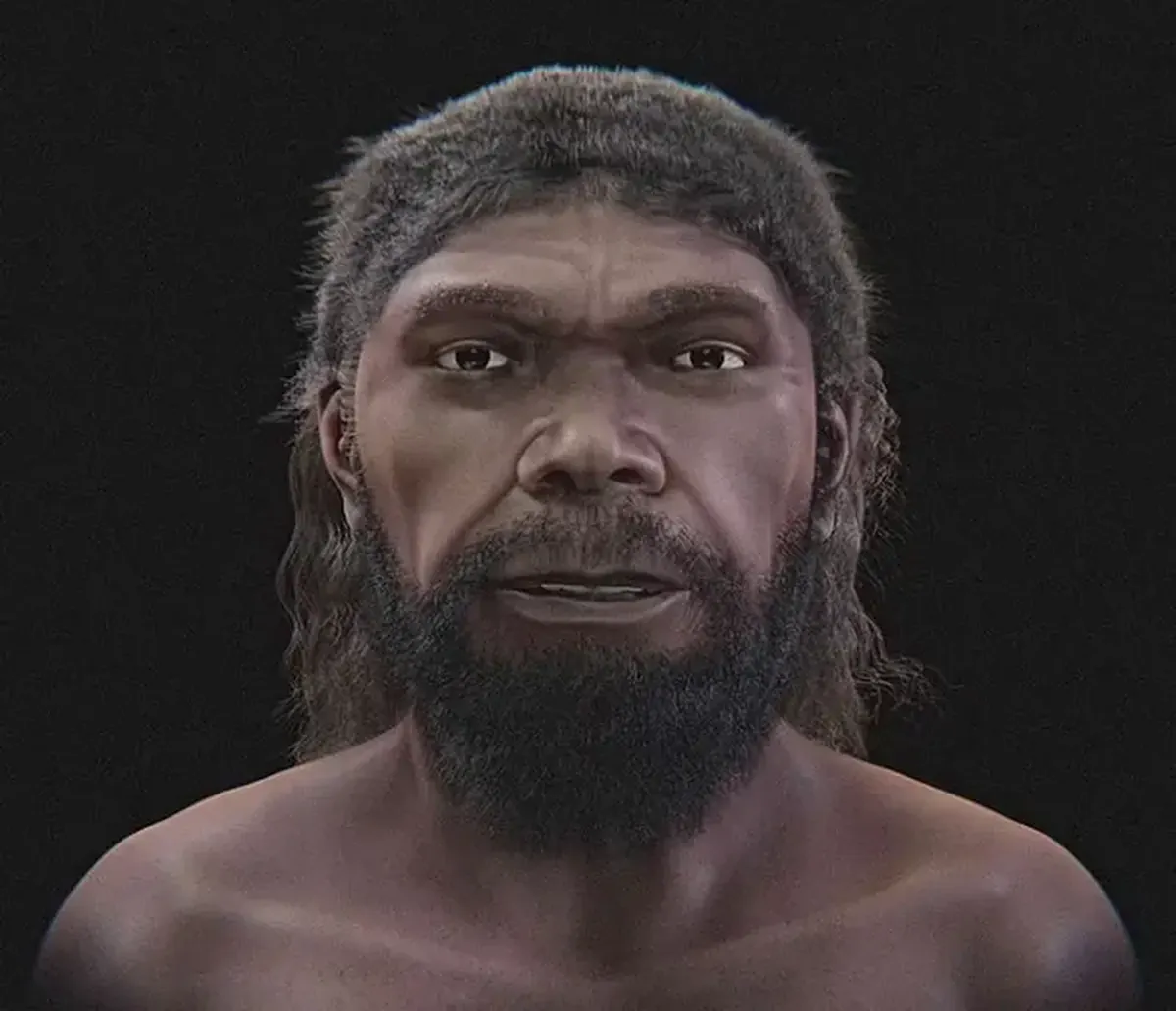
Homo heidelbergensis. Adam might have looked like this.
That claim is provocative but not supported by direct evidence. Even if Homo heidelbergensis were the first “humans” in some sense and humans did descend from a single ancestral pair, there’s no reason to think that pair were the only humans alive then. And if Adam were Homo heidelbergensis, he probably wouldn’t have lived in the putative Garden of Eden in what is now Iraq.
Recognizing that Adam and Eve might not be Homo sapiens could unsettle conservative Christian readings of Genesis. Yet it’s striking that, within modern theories of human evolution, there is nothing that strictly rules out the idea of a primordial ancestral pair in some genealogical or genetic sense.
