
 Gaby
Gaby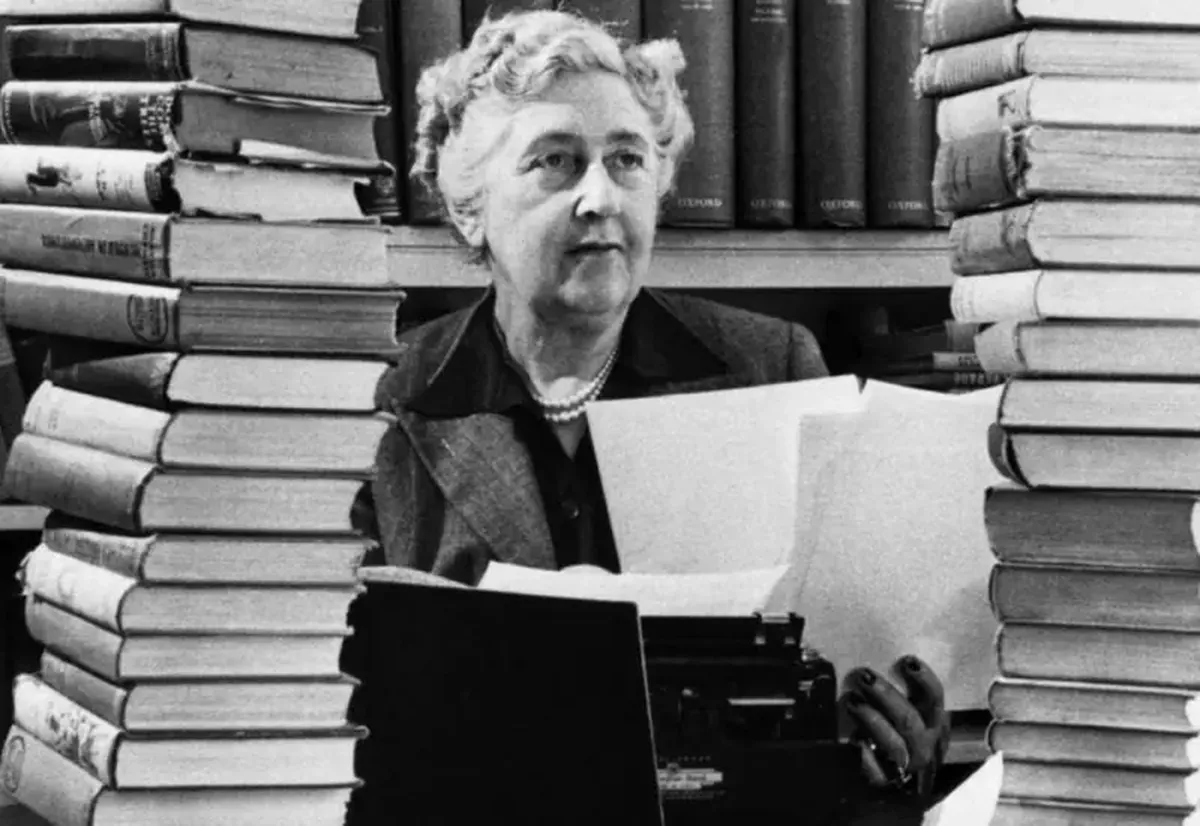
Her books have sold more than 4 billion copies, ranking her only behind the Bible and Shakespeare. More than seventy of her detective novels have been translated into over a hundred languages, along with 20 collections of short stories, 16 plays, and six novels. But Agatha Christie’s life is nearly as fascinating as the mysteries she wrote—her biography left the world with as many questions as her fiction.
Games of Imagination
Agatha Christie was born Agatha Mary Clarissa Miller on September 15, 1890, in Devon, England. Her mother, Margaret Clara (née Bemer), was the daughter of an army captain. Margaret was raised by a wealthy American widow and later married Frederick Miller. Their happy marriage produced three children, with Agatha as the youngest, born when her mother was 35.
From a young age, Agatha stood apart from her siblings with a preference for solitude and a naturally introverted temperament. The future writer favored fantasy over reality and found what she called her “ideal companions” in her Yorkshire terrier, Tony, and a family of cats. Her favorite toy was a hoop, which she turned into different roles with her imaginative play. Escaping to the garden with that toy, the girl who could entertain herself needed no one else’s attention. The hoop became a train and the garden paths became railway tracks. “Engineer” Agatha Clarissa spent her days running an imaginary train, racing the hoop between fictional stations. Lost in daydreams, she invented dialogues with objects and spun elaborate plots.

Agatha Christie as a child
At school, lessons were minimal; their education was overseen by their mother and a governess. That arrangement may explain Agatha’s early reading ability—she learned to read at four or five and knew the family library well—but she struggled with spelling, and her novels contained their share of misspellings. Even so, Agatha never initially imagined a career as a writer and, after publishing a dozen books, still described herself as a “housewife.”
Finding Her Place
At 11, Agatha’s father died of influenza after suffering several heart attacks. Life grew harder for the family, but her mother did not have to sell the estate; a financial settlement arrived four years later. At 15, Agatha began piano and singing lessons. Because a relative had succeeded on the operatic stage and performed at the Grand Opéra in Paris, Agatha was sent to Paris to develop her musical skills. Her shyness, however, prevented her from pursuing a public musical career.
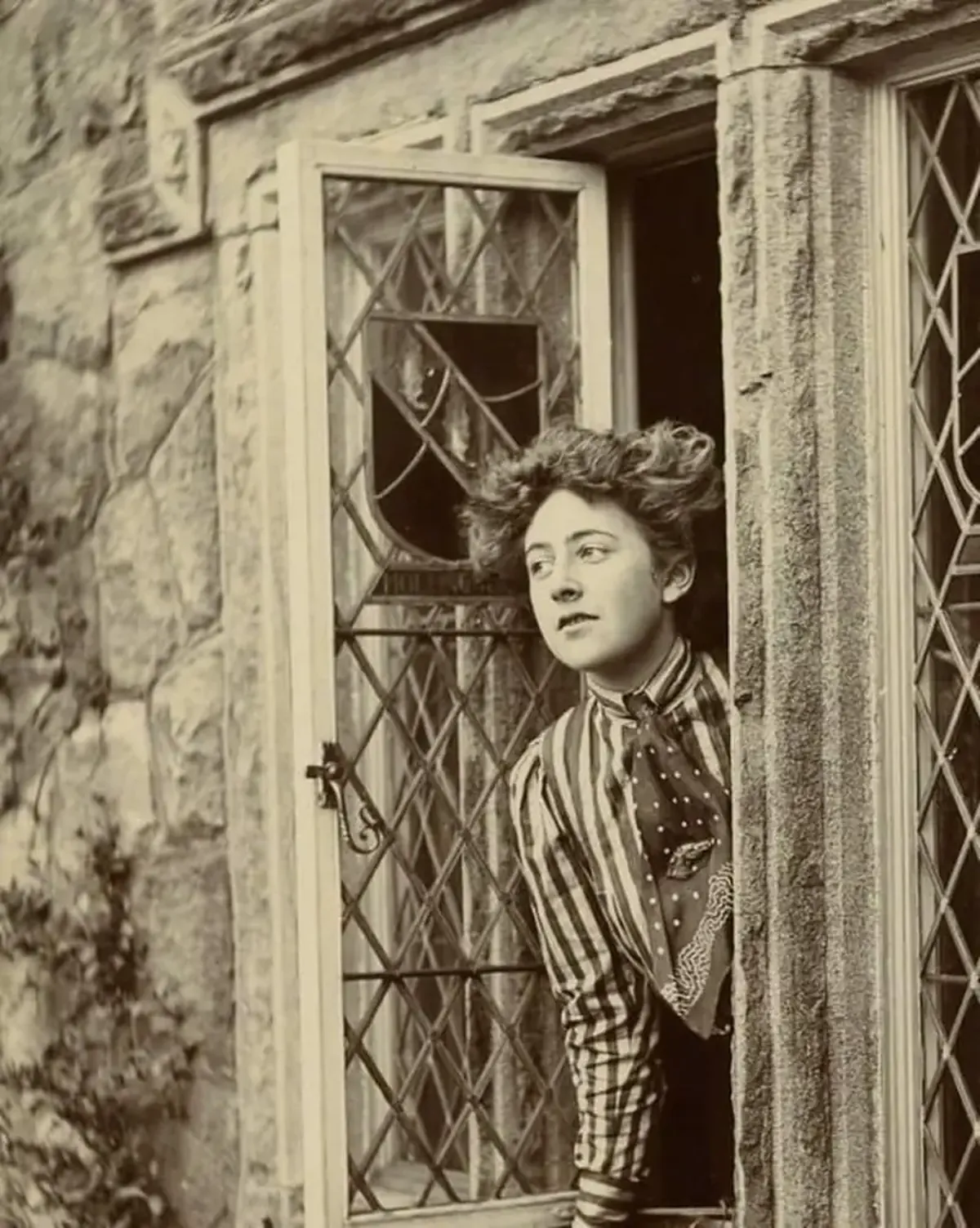
Agatha in her youth, 1910s
During a trip to Cairo with her mother, Agatha Clarissa Miller met a charming Royal Air Force pilot, Archibald Christie, who proposed. Over the next year and a half, while he finished his flight training, the couple broke off their engagement several times. They married eventually, but soon separated: the young pilot was deployed to France while the 24-year-old Agatha returned to the military hospital where she had worked before marriage. Having learned the basics of pharmacology during her shifts, she was accepted into the hospital pharmacy. That experience—and the theme of poisons—would later feed her fiction: poisoning features in about eighty of the crimes she described.
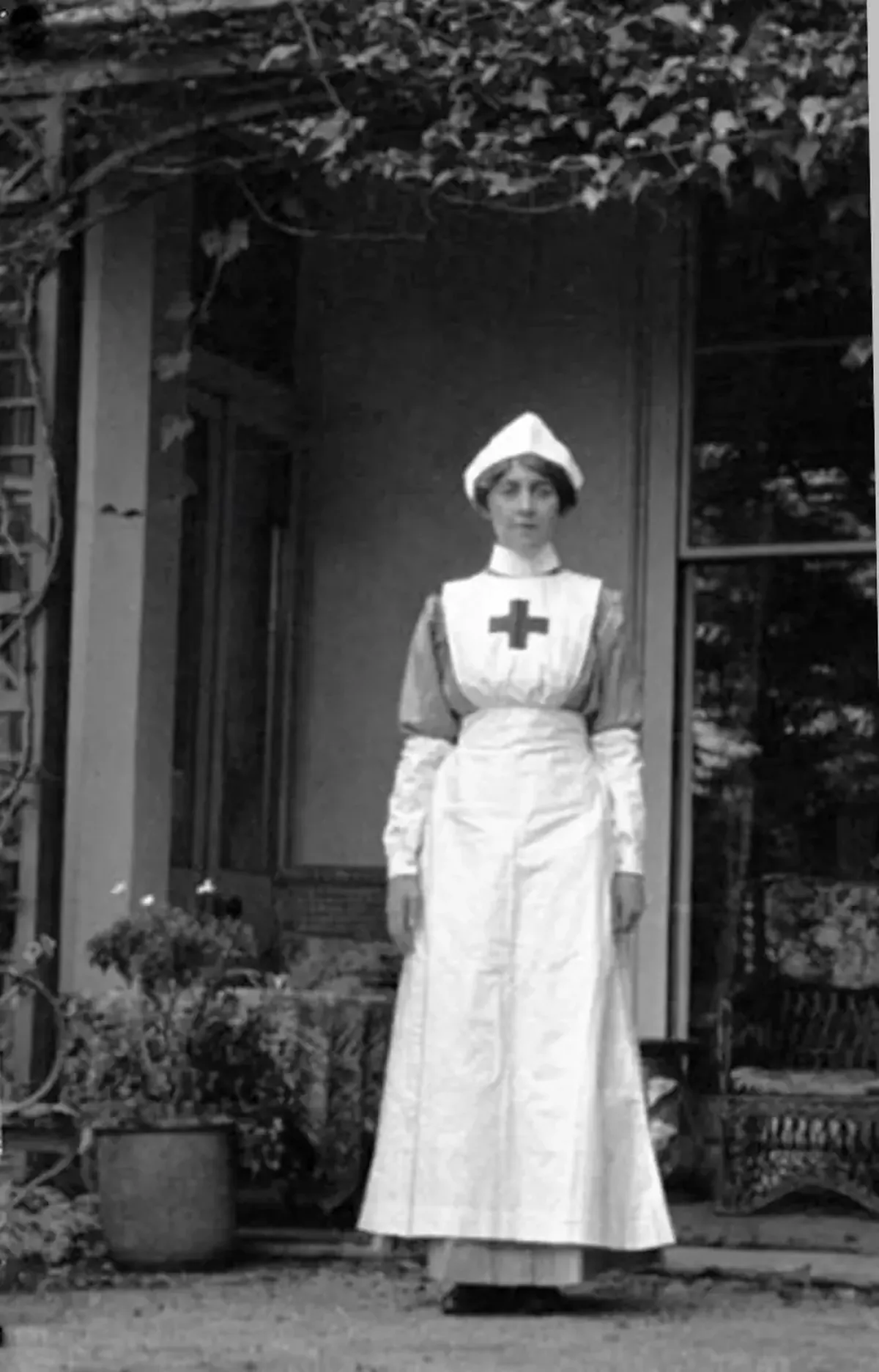
Agatha Christie – a nurse with the British Red Cross
Working in the pharmacy inspired Agatha Christie to jot down stories she overheard while interacting with customers. For example, the characters in her first published detective novel, “The Mysterious Affair at Styles,” were Belgian refugees. She wrote the novel during a 1915 vacation, but it was published five years later after six revisions. Her first payment of £25 in 1920 was a financial lifeline: she had been out of work for two years while caring for her newborn daughter. Writing income would repeatedly support the future queen of detective fiction during hard times, the first of which came six years later.
Misfortunes Never Come Alone
1926 was brutal for Christie. It was the year her mother died, her brother was hospitalized for drug-related psychiatric problems, and publishers criticized the release of The Murder of Roger Ackroyd, accusing it of breaking the rules of English detective fiction. Alongside professional turmoil and family grief, a personal crisis unfolded: her husband asked for a divorce and admitted his feelings for another woman.
The scandal reached a climax on December 4, when the writer mysteriously disappeared. After ten days of searches, police found only her abandoned car with Agatha Christie’s personal belongings inside: her coat and shoes were left behind. Few expected a happy outcome.

Newspaper report about Agatha’s disappearance
Then, on December 14, Mrs. Christie reappeared, returning home in high spirits as if she had just been on holiday. In fact, she had been staying alone in Yorkshire while everyone else searched for her. She was recuperating at a spa hotel under an assumed name, registered as Teresa Neele—the surname of the woman who had won her husband’s affections (Archibald Christie’s new partner was Nancy Neele, his golf partner).
Flight of Fancy
When asked about the disappearance, Christie later claimed she could not remember the episode because of a head injury. Skeptical reporters suggested her evasions aimed to avoid stirring up unpleasant scandals.
Psychologist Andrew Norman, who doubted a purely traumatic amnesia, saw the episode as a sign of a rare dissociative state called fugue—a sudden, purposeful relocation to an unfamiliar place paired with loss of personal memory while retaining general knowledge, including literary awareness.
Another, more provocative theory suggested that an aggrieved and inventive woman might have staged her disappearance to frame her unfaithful husband for murder. Whatever the truth, not long after the episode Christie adopted the pen name Mary Westmacott and invented a fictional biography of an “ironic young blonde.” She kept that secret for decades before revealing that Agatha Christie and Mary Westmacott were the same person.
Life Settles Down
A new chapter began in 1930 after Christie met archaeologist Max Mallowan during an excavation that also included her acquaintance Leonard Woolley and Woolley’s wife, Catherine. Max, who had a French mother, was professionally interested in the Sumerian site and personally captivated by Agatha.
The woman intrigued him with an unexpectedly calm demeanor during a car breakdown in the desert; he admired her composure. Agatha really did not complain about the repairs—not out of polite restraint but because she fell asleep. She appreciated Max’s reliability: when a telegram arrived about her daughter’s illness, he quietly started the car and did everything to get her to London as quickly as possible. She leaned on his steady shoulder, and that autumn she married him.

Agatha with her second husband, Max Mallowan
Christie’s daughter approved of the marriage, though the writer’s sister refused even to attend the wedding. The sister objected to the age gap: Max was 14 years younger than Agatha, and the bride worried he seemed more like a peer to her nephew than to a husband. To avoid public attention, Agatha and Max married quietly in Edinburgh and then went to Venice. Shortly after the wedding, Christie published Murder at the Vicarage, the novel that introduced the delightful elderly detective Miss Marple.

Agatha with her daughter Rosalind
Far from the “Curtain”
She continued publishing under the name Agatha Christie, keeping the surname of her first husband. Her writing didn’t stop her from traveling with her second husband on archaeological digs, where the couple collected artifacts now on display in the British Museum.
Before World War II the couple moved to Greenway House, where in 1939 Christie wrote one of her favorites, And Then There Were None. In 1943 she became a grandmother. She later arranged that the copyright for her Miss Marple novels be left to her daughter Rosalind and her grandson Matthew, while her husband Max inherited the rights to her final Poirot novel, Curtain.
The couple’s silver wedding anniversary in 1955 coincided with broad recognition of Christie’s achievements. Her adapted play Witness for the Prosecution won the Edgar Award. American colleagues honored her as a Grand Master of the mystery genre, and British peers named her a leading English-speaking writer, making her a lifetime president of the Detection Club. In 1956 Christie was made a Dame in the Order of the British Empire; in 1968 her husband received a knighthood for his archaeological work.
Grateful for a long and successful career, Christie finished her Autobiography in 1965. The manuscript waited to be published and finally appeared in 1977, on the anniversary of her death. Even as she faced cognitive decline later in life, her imagination remained inexhaustible: the queen of detective fiction kept inventing new plots well into her eighties.

Interesting Facts
- Christie studied Alice’s Adventures in Wonderland and The Blue Carbuncle closely; Lewis Carroll and Arthur Conan Doyle were among her “sacred texts.”
- As a teenager she wrote an operetta, but fear of public performance caused her to faint on stage during a school concert.
- Christie joked that she became a writer because it kept her out of the public eye.
- She preferred not to have a private study because she did not want to disturb her family; she wrote at the kitchen table during breaks and sometimes described herself as an archaeologist’s wife.
- Christie supported her husband’s career, backing his desire for independence and helping him find investors. After 45 years of marriage, she often valued his achievements more than her own.
- The author met members of the British royal family, including Queen Elizabeth II.
- Agatha Christie died at 85 on January 12, 1976, after catching a cold. She passed away at home in Wallingford and was buried in the village cemetery in Cholsey, where her husband Max Mallowan is also buried.
- Her daughter lived to be 85 as well. Rosalind Margaret Hicks died on October 28, 2004. Her grandson Matthew Pritchard runs the Agatha Christie Foundation.
Quotes by Agatha
- A true lady leaves a little food on her plate, slips a spare stamp into an envelope, wears clean underwear on a trip in case of an accident, and smiles even when the world is falling apart.
- The greatest mistake in life is to encounter masterpieces at the wrong moment.
- Conversation is largely to prevent people from thinking.
- The person who loves more is the one who is loved less.
- Nothing is as burdensome as loyalty.
- The world is strangely arranged: two people can look at the same thing and see the opposite.
- To avoid fearing old age, marry an archaeologist. For someone who loves antiquities, things with history are more interesting.
- In old age it no longer matters how old you are.
- When I remember that I was young once too, my daughter smiles.
- Young people think old age is foolish, but old people know for sure that the foolish ones are the young.
