
 Gaby
Gaby
Sherlock Holmes’s method of deduction has captivated readers for generations, but the character was a constant annoyance to his creator, Arthur Conan Doyle. Still, the fame and money Holmes brought forced Doyle to tolerate the sleuth and to fold detective stories into his wider interests.
Childhood: Legends of Knights Instead of Fairy Tales
Arthur Conan Doyle was born in Edinburgh, Scotland, in 1859, into a family of architects. From a young age, his mother, Mary Foley, told him tales of knights, their feats, and their adventures rather than traditional fairy tales. He loved those stories and later made his own versions of them.
When six-year-old Arthur went off to preparatory school, he quickly gained a reputation as an entertaining storyteller. There, and later at a private college where he continued his studies, classmates eagerly listened to his “tales,” always waiting for the next installment. To stay popular, he kept inventing new stories. He found that easy, and his versions often improved on the originals. Gradually, young Arthur began writing them down, since sometimes he had to repeat a story for classmates who had dozed off.
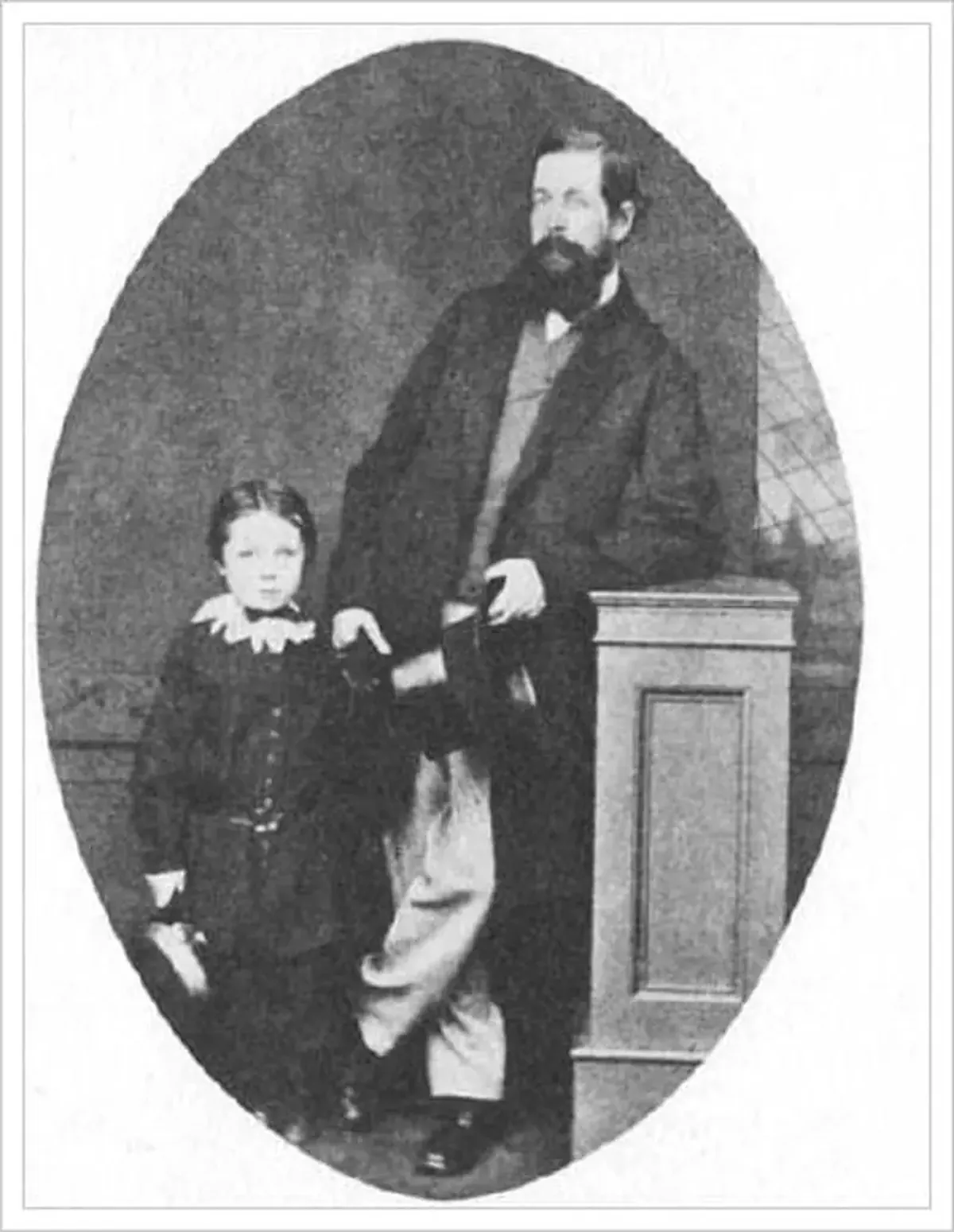
Little Arthur with his father
Not all classmates enjoyed Arthur’s storytelling; for example, he was often bullied by the Moriarty brothers. They also excelled at mathematics, a subject Arthur hated. As a writer, Conan Doyle got his revenge on those tormentors by naming his criminal mastermind Professor Moriarty.
At 17, he enrolled in the medical faculty at Edinburgh University and graduated ready for a progressive and respected career as a surgeon, receiving several offers to practice. During his time at the university, Doyle met James Barrie, who would become the creator of Peter Pan, and Robert Louis Stevenson, later the author of Treasure Island.
Traveler: From the Arctic to Africa
Since his school days, he feared wasting his youth and life on the ordinary, so he chased adventure. While still a medical student, Arthur joined an Arctic expedition on a whaling ship that sailed beyond the Arctic Circle. That six-month voyage gave him life experience and material he later used in his story “The Captain of the ‘Polar Star.'”
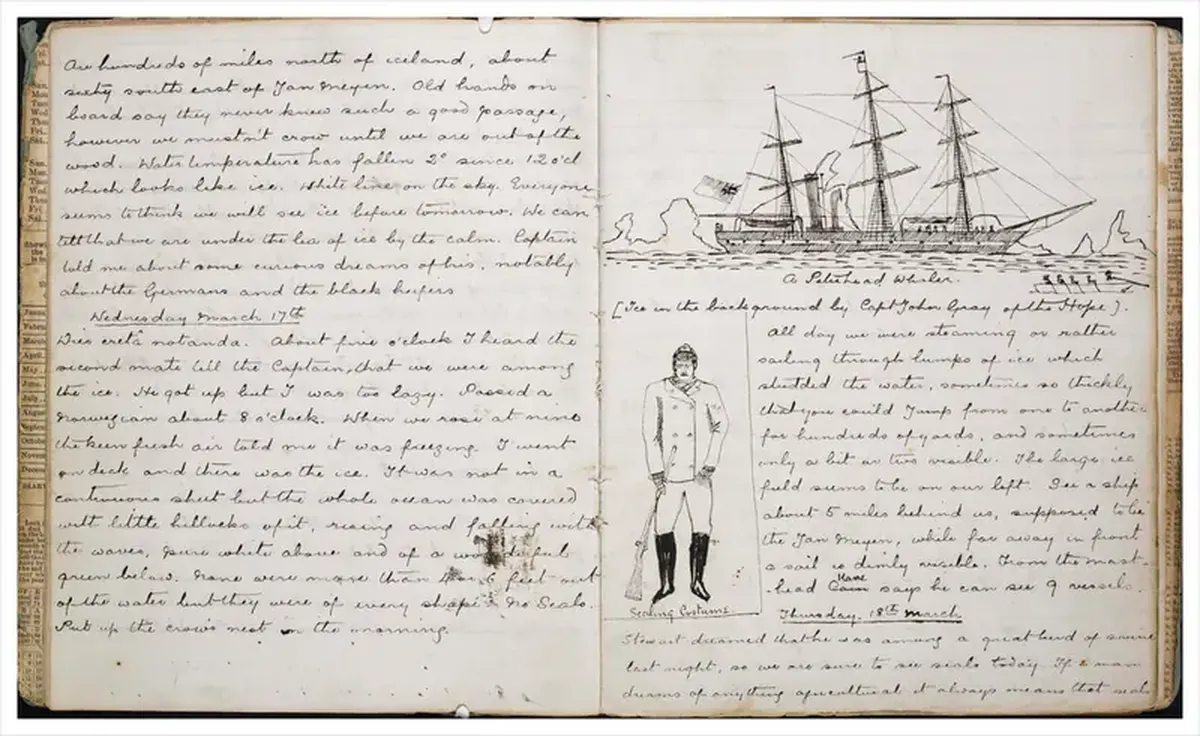
A page from the journal Conan Doyle kept while aboard the whaling ship “Hope.”
After finishing his studies and starting a medical practice, Doyle seemed to have a stable future. But his thirst for adventure kept him from staying confined to a surgical office and led him to sail to Africa, where he served as the ship’s doctor on a steamer cruising the west coast.
When he stepped off the gangway back in England, Conan Doyle called himself a writer. He still had little time for literature, though, and returned to medical work, got married, and raised children.

Conan Doyle with his wife and children, 1923–1925
Novelist: The “Quiet” Fame of a Historical Fiction Author
This continued until 1888, when his novel “The Adventures of Brigadier Gerard” was published and attracted favorable attention from readers. The young writer did not stop there and went on to publish historical novels that mattered to him. He rarely failed. Critics praised his chivalric work “The White Company,” and he was thrilled to see his novel compared to Walter Scott’s “Ivanhoe.”
Having explored chivalry, Doyle turned his attention to French history. His Scottish perspective on the Battle of Waterloo, Napoleon’s ambitions, and other pivotal events interested readers, and his books found success again.
It was clear that Conan Doyle had found his literary niche, but his fame simmered quietly. At the time, the global book market teemed with writers publishing mystical thrillers, adventurous tales, and steamy romances, so breaking out was difficult. It was the moment to try a different pen.
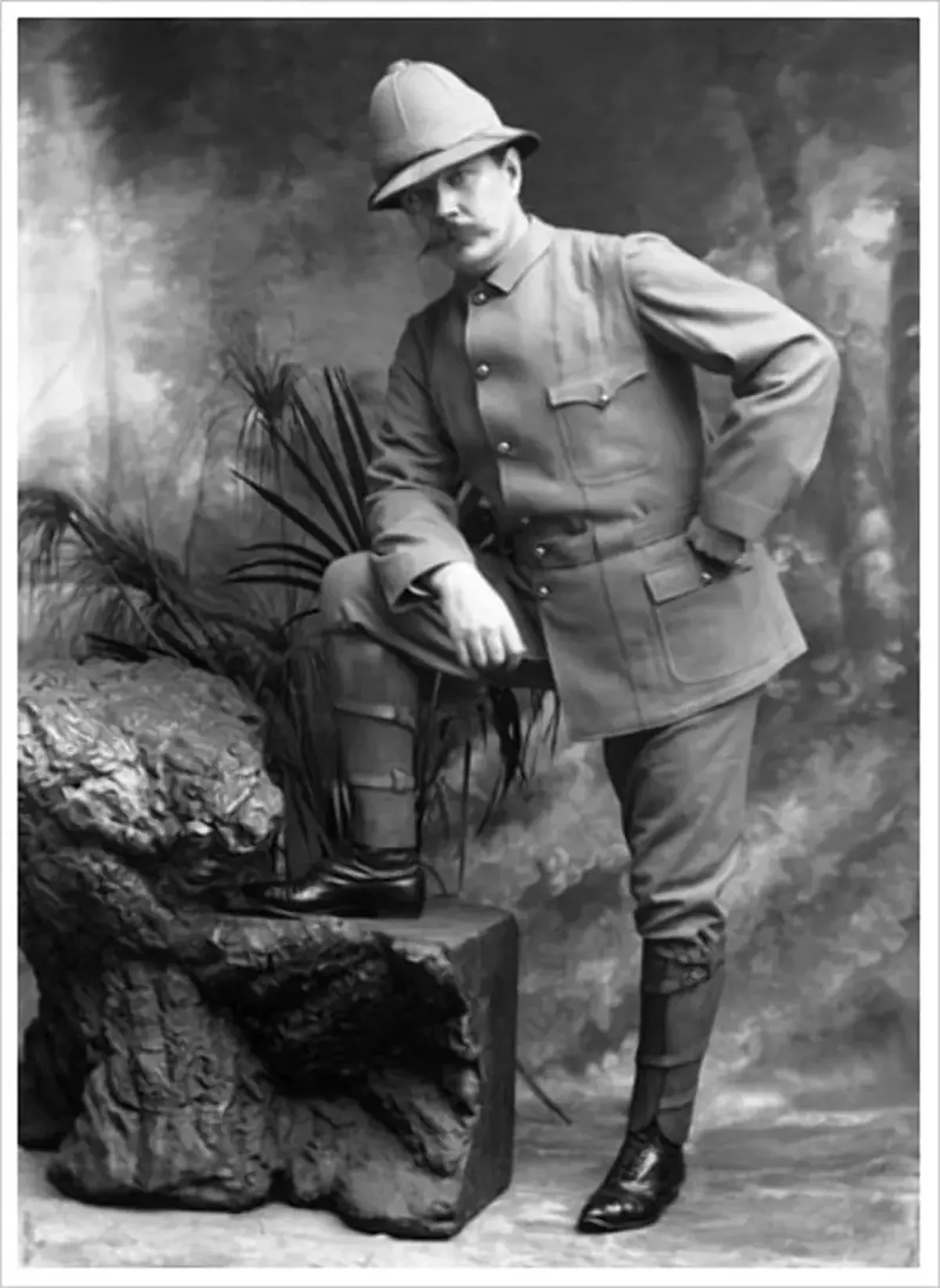
Conan Doyle in volunteer uniform during the Anglo-Boer War
The Creator of Sherlock: The Genius of Deduction Takes the Stage
During this period, his first detective story, “A Study in Scarlet,” was published and introduced the brilliant detective to readers for the first time. From that moment, Sherlock Holmes began a journey across books, screens, and stages that continues today.
What made that “Study” so gripping? Largely its main character, Sherlock Holmes, who was modeled on Joseph Bell, a lecturer at Edinburgh University known for his ability to “read” people. Whether Bell’s skill came from intuition or a deep command of observation and medical knowledge, he was an extraordinary figure. Doyle needed only to shape that personality and send the detective after criminals.
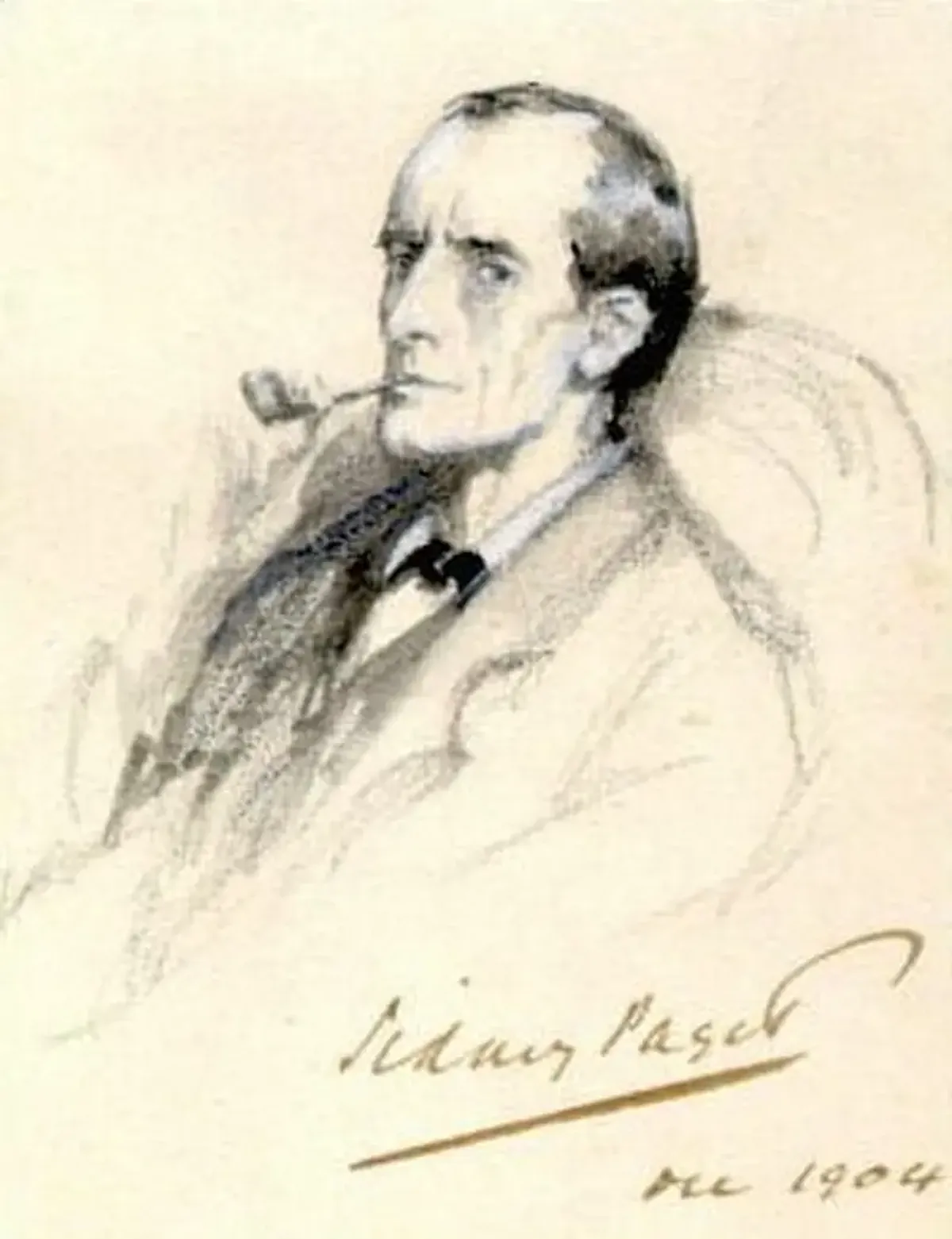
Portrait of Sherlock Holmes by Sidney Paget, 1904
From the 1890s until the end of his life, Arthur Conan Doyle never fully abandoned Sherlock, although he once tried to kill the detective off at the hands of Professor Moriarty in “The Final Problem.” One story says Doyle’s mother urged him to keep Holmes alive, arguing that readers wanted more. Another tale claims Queen Victoria intervened, asking the author to bring Holmes back, after the detective’s supposed fall at the Reichenbach Falls. And letters from readers demanding Holmes’s return poured in.
Sherlock Holmes returned to new collections of cases. Doyle himself regarded the detective stories as light reading, but they brought him fame and money. He made peace with Holmes’s popularity while continuing to see himself primarily as a writer of historical fiction.
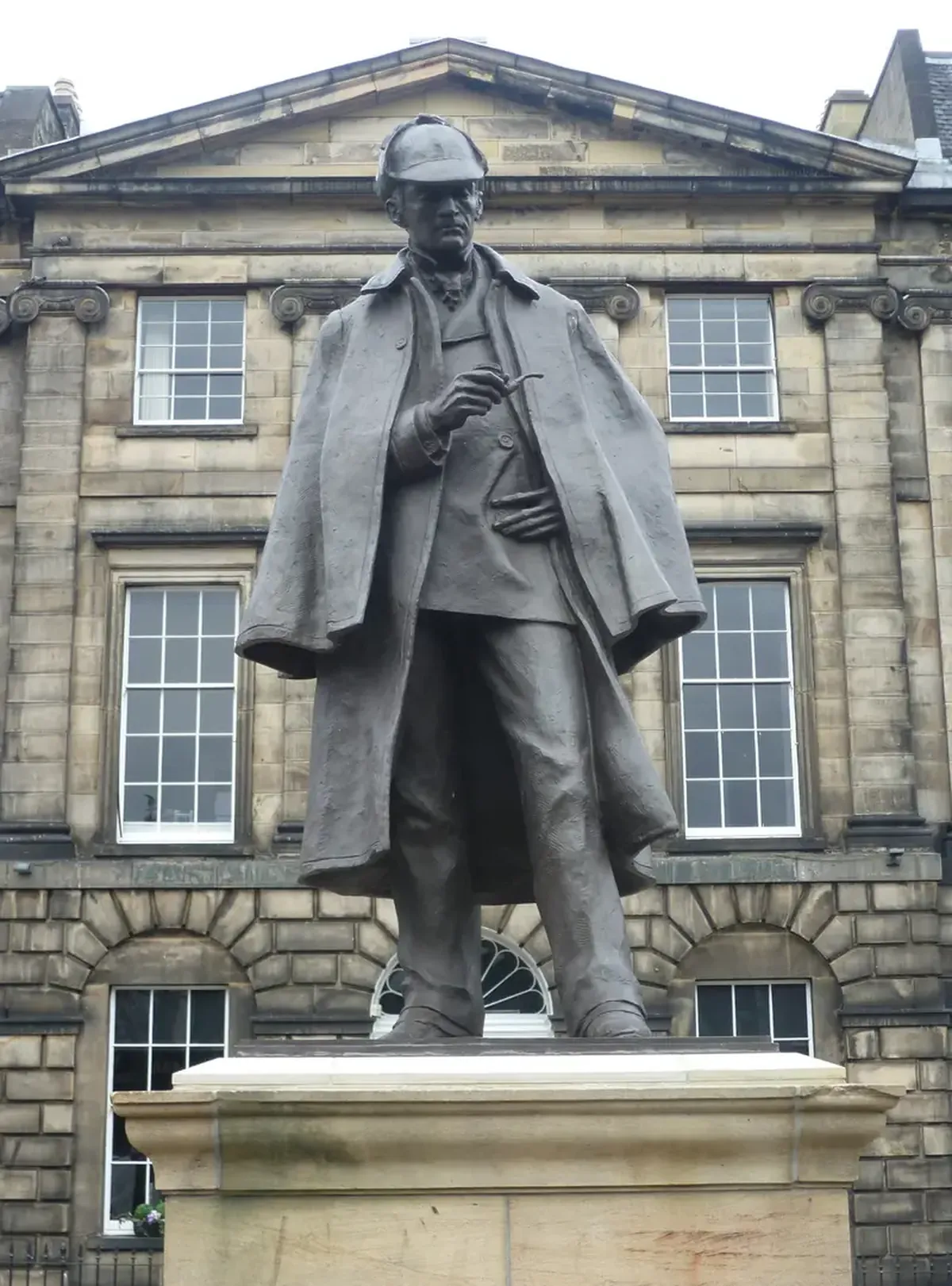
Statue of Sherlock Holmes in Edinburgh
Mystic: Is There Life After Death?
Doyle was also fascinated by the supernatural. Beyond writing eerie tales, he became a committed spiritualist. That interest fit the era: the late 19th and early 20th centuries saw a boom in mysticism. In Western Europe, clubs devoted to contacting the dead flourished, and gatherings often ended with séances. Newspapers printed accounts of ghosts, mediums, and other odd phenomena. Believers and skeptics argued fiercely, and organizers of spirit events made a profit.
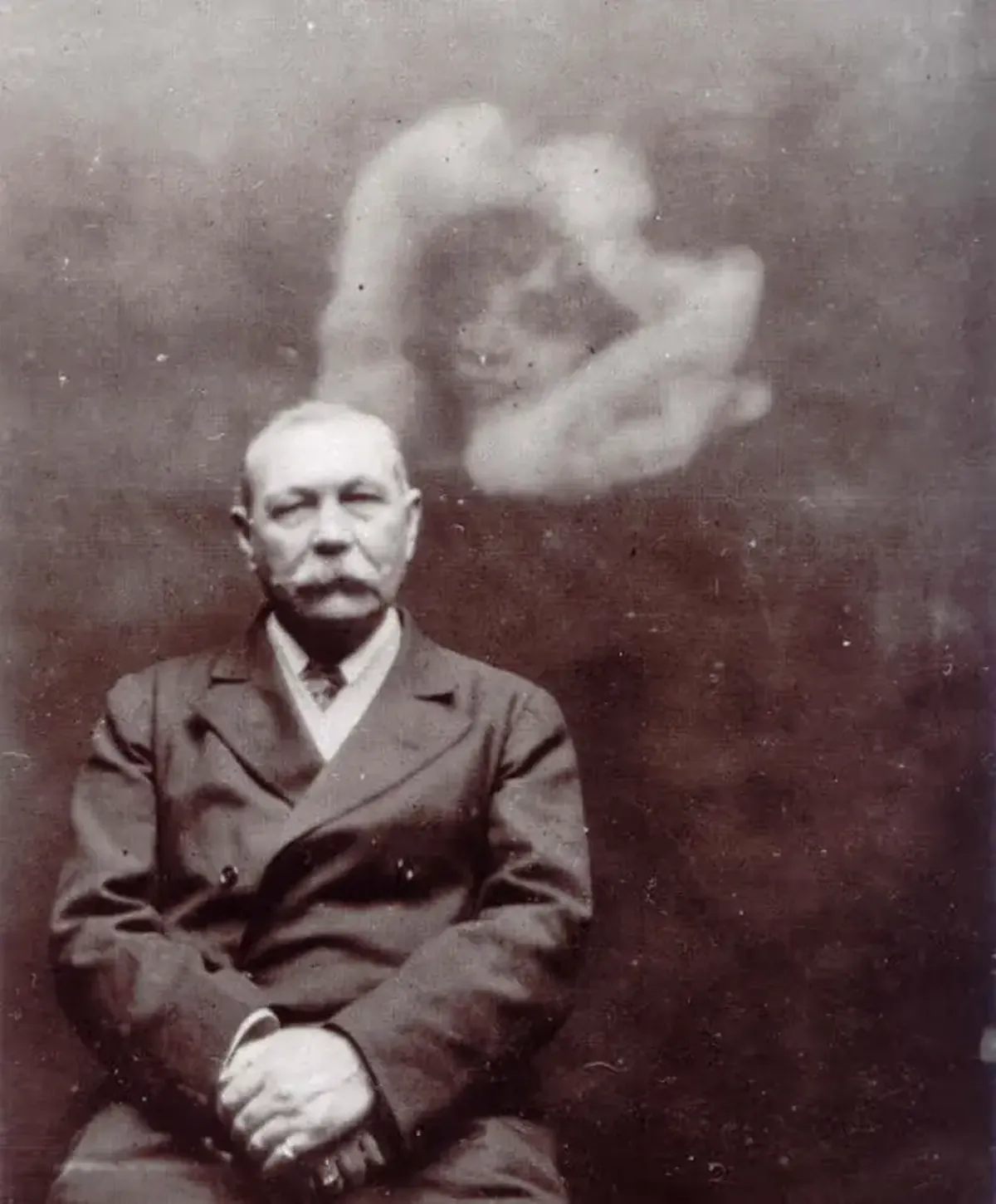
Doyle was swept up in the trend: he collected and studied occult books, attended séances, and often conducted them himself. He was especially curious about what happens after death. Whether he ever received a convincing answer, no one can say, but he remained a believer in spiritualism until the end of his life.
Sir Arthur Conan Doyle: Interesting Facts About His Life and Work
- During the Anglo-Boer War, Conan Doyle tried to enlist as a soldier but was turned away for being overweight. He did go to the war in a professional role, serving as the head of a field hospital, an experience that helped shape the character of Dr. Watson.
- When Doyle decided to “drown” his annoying detective at the Reichenbach Falls, readers protested: more than 20,000 subscribers canceled their subscriptions to the magazine that ran the stories, and crowds gathered daily outside the editorial office shouting, “Bring back Holmes!”
- Some scholars argue that Doyle anticipated forensic methods such as collecting cigarette butts and ashes, blood analysis, and ballistic tests in his stories—techniques later used in real crime investigations. One extension of that theory even suggests Doyle quietly practiced detective work himself.
- Not just Sherlock: Doyle wrote “The Lost World,” about the revival of dinosaurs on a remote plateau. That book later influenced Michael Crichton’s approach in “Jurassic Park.”
- In 2004, an archive of Sir Arthur Conan Doyle was found in the office of a London law firm: among more than 3,000 papers were diary entries, manuscripts of unpublished works, drafts, and correspondence with Bernard Shaw, Winston Churchill, and Oscar Wilde.
- After his death, his children and other relatives attempted to contact his spirit. Whether they missed him or hoped to learn the locations of rumored buried African treasures remains unknown.
