
 Gaby
GabyThe creator of “The Thinker,” “The Burghers of Calais,” and “The Kiss” reinvented how artists depict the human body. What exactly makes his images unique, and why did patrons often shy away from commissioning his sculptures?
Not Everything at Once
François-Auguste-René Rodin was born on November 12, 1840. He was the son of a civil servant from his father’s second marriage. Noticing his son’s interest in drawing from a young age (the boy was indifferent to other school subjects), his father enrolled the 14-year-old at the École Gratuite de Dessin, where future artists, decorators, restorers, jewelers, and other design professionals trained. Even after that training, he failed to gain admission to the École des Beaux-Arts, applying three times without success.

Auguste Rodin, photo from 1862
For much of his life, Rodin studied with established masters and honed his technique in etching, printmaking, painting, and sculpture. He worked as an apprentice and decorator, took on public sculpture commissions, and even spent time as a novice. A priest who mentored him persuaded Rodin to return to art.
The Charm of Imperfection
In 1864, in his first studio — a converted stable — Rodin modeled a bust of a local peasant famous for his broken nose. Before it could be sent to the art gallery, the bust cracked in the cold, and Rodin had to replace it with a surviving mask. By making an unattractive face with scars, wrinkles, and cracks in the material the focus of his work, the sculptor challenged academic notions of beauty. Experts at the Paris Salon rejected the scandalous piece, and it wasn’t until 1875 that the marble version of “The Man with the Broken Nose” found appreciation among art lovers.

Auguste Rodin. “The Man with the Broken Nose”
The Right to a Name
During the Franco-Prussian War Rodin was discharged from the army because of poor eyesight. After moving to Belgium, he produced many unnamed works in Brussels and Antwerp. To make a living, he created decorative sculptures for clients who mass-produced figurines for sale. One day, after signing one of his bronze figures without permission, Rodin lost his job.
Later he worked out joint sales: editions sold in Belgium carried a partner’s name while editions sold in France bore Rodin’s name. Eventually he standardized authorized copies — France did not limit them to 12 until 1956 — which helped museums and collectors in various countries acquire his work.
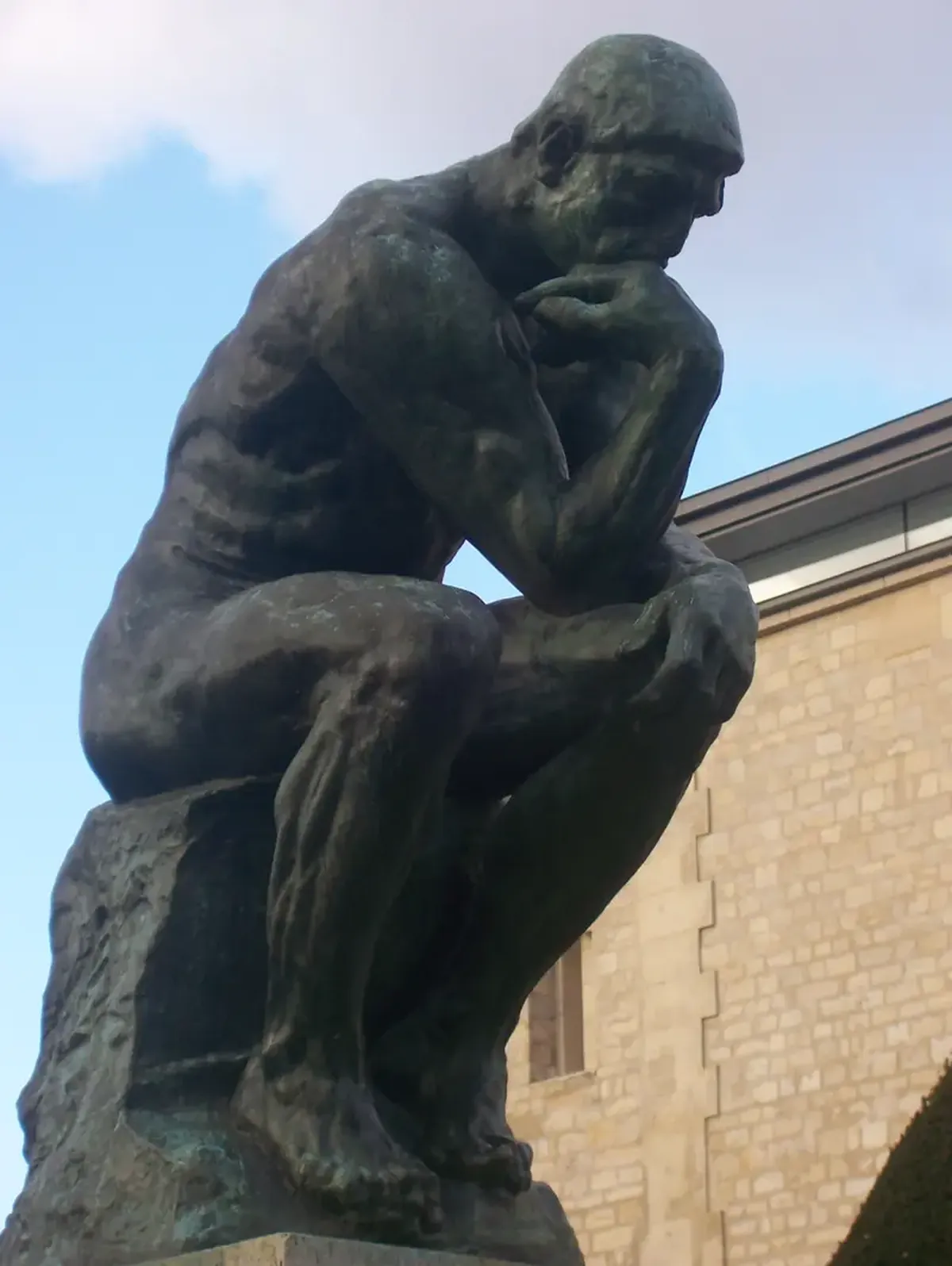
“The Thinker,” 1888
A Rebel’s Handwriting
Rodin gained a reputation as a rebel who flouted conservative rules in sculpture. He never considered himself a follower of any single movement, balancing realism, romanticism, impressionism, and symbolism. His visual signature combined symbolic imagery, timeless subjects, and an unfinished look. He did not treat sculptures as fixed objects; he believed idea and form could evolve alongside the maker. Sometimes he refined and reworked pieces, and he often showed sketches and unfinished versions to the public.
He received his first state commission at 40 but refused to be shaped by lucrative collaborations. He worked on his own terms, often missing deadlines and even returning advance payments. Public and private patrons sometimes responded by terminating contracts and rejecting his works.
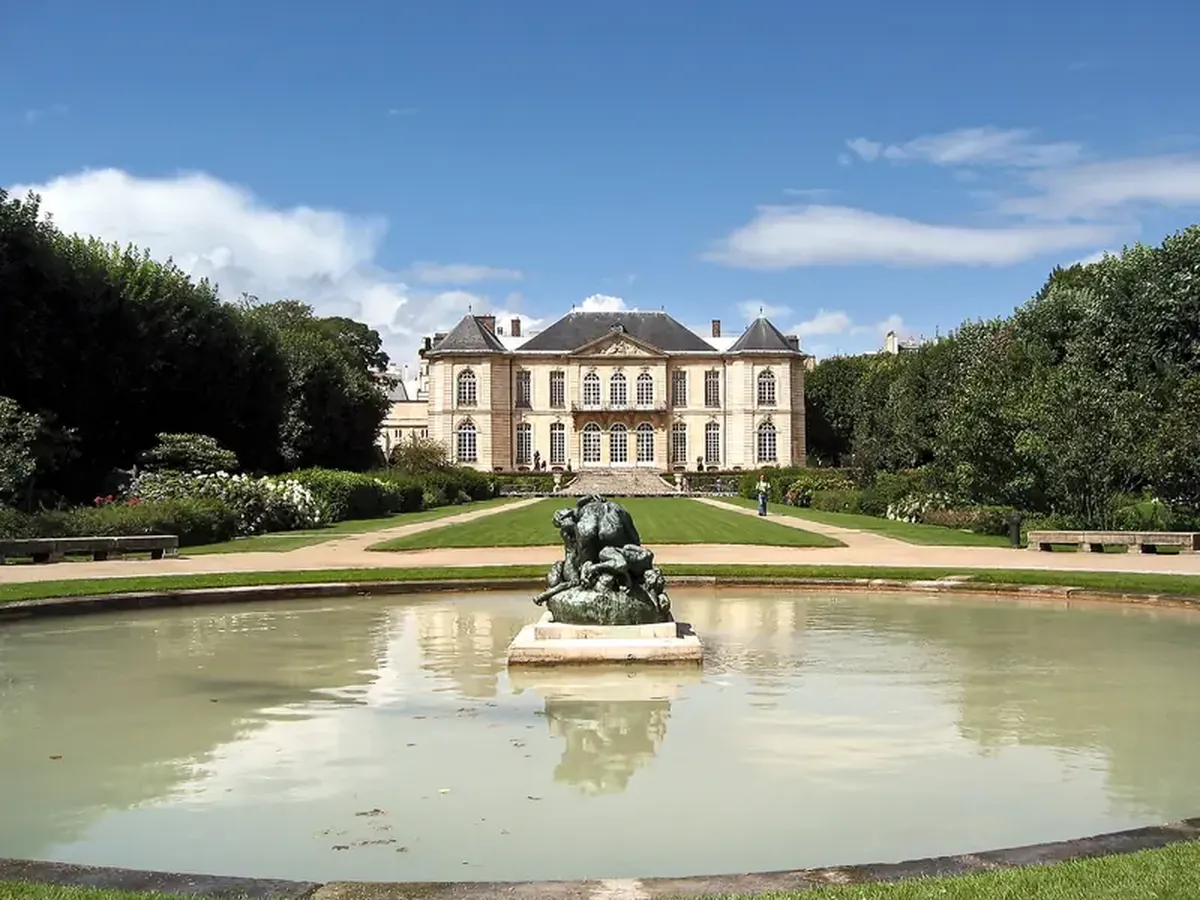
Biron Palace — Rodin Museum
Nothing Stagnant
Rodin’s figures seem to emerge from the stone, the birth of form from an amorphous mass: his sculptures are not static objects but centers of implied movement. He created the illusion of motion even when it meant ignoring classical contrapposto and strict anatomical accuracy. Rodin refused to hire professional models who posed in the traditional stances of classical sculpture. He preferred to work with ordinary people who moved through his studio while he sketched or made clay studies.
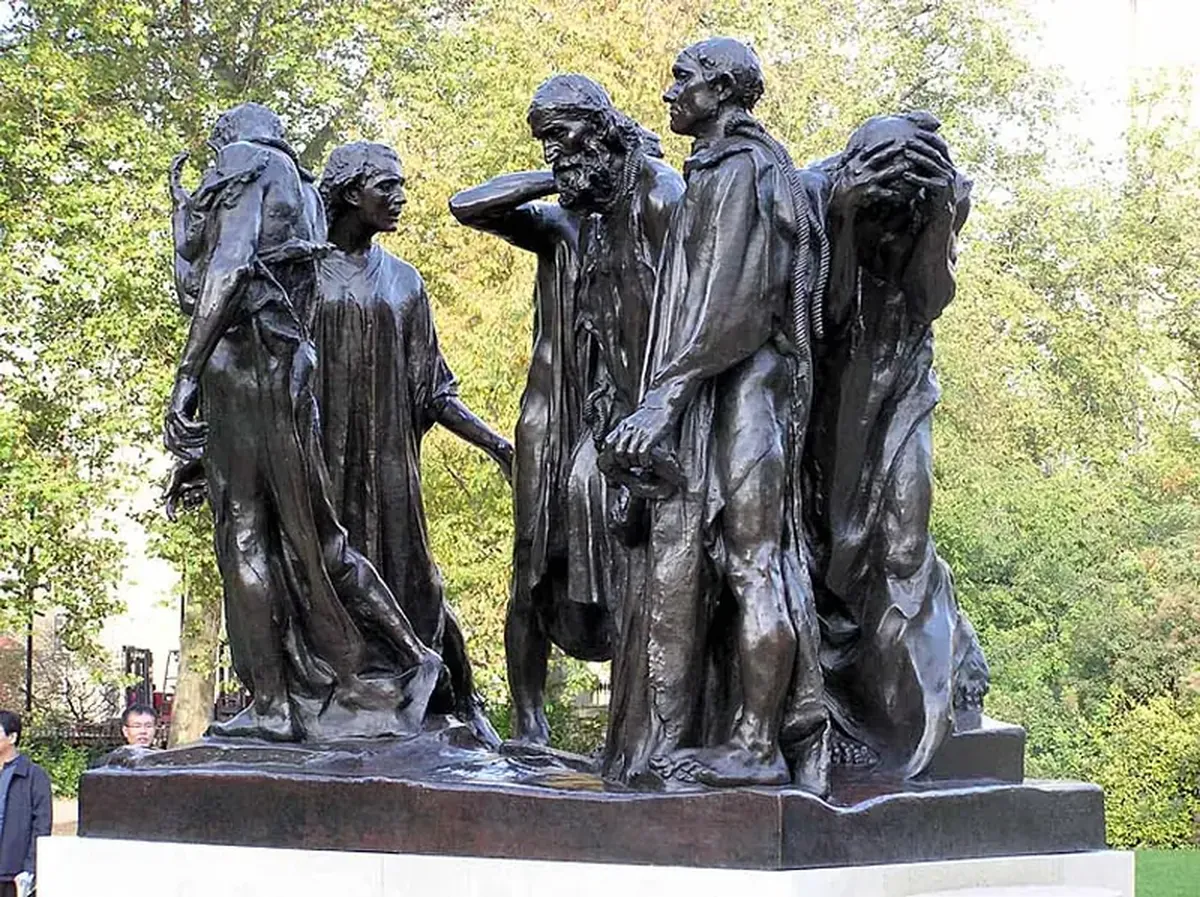
Auguste Rodin’s sculpture “The Burghers of Calais”
Rodin said his works should be seen “through tears of emotion.” A defining feature of these sculptures is their emotional depth. His figures convincingly convey a wide spectrum of human states: pain and hatred, despair and love.
Love and More
Rodin’s personal life was as emotionally charged as his art. From 1864 he lived with seamstress Rose Beuret (1844–1917). When she was 22 she gave birth to Rodin’s son, but the boy did not receive his father’s surname. Rodin married Rose only late in life — on January 19, 1917. She died seriously ill just 25 days after their wedding. On November 17, a sudden bout of pneumonia claimed Auguste Rodin.
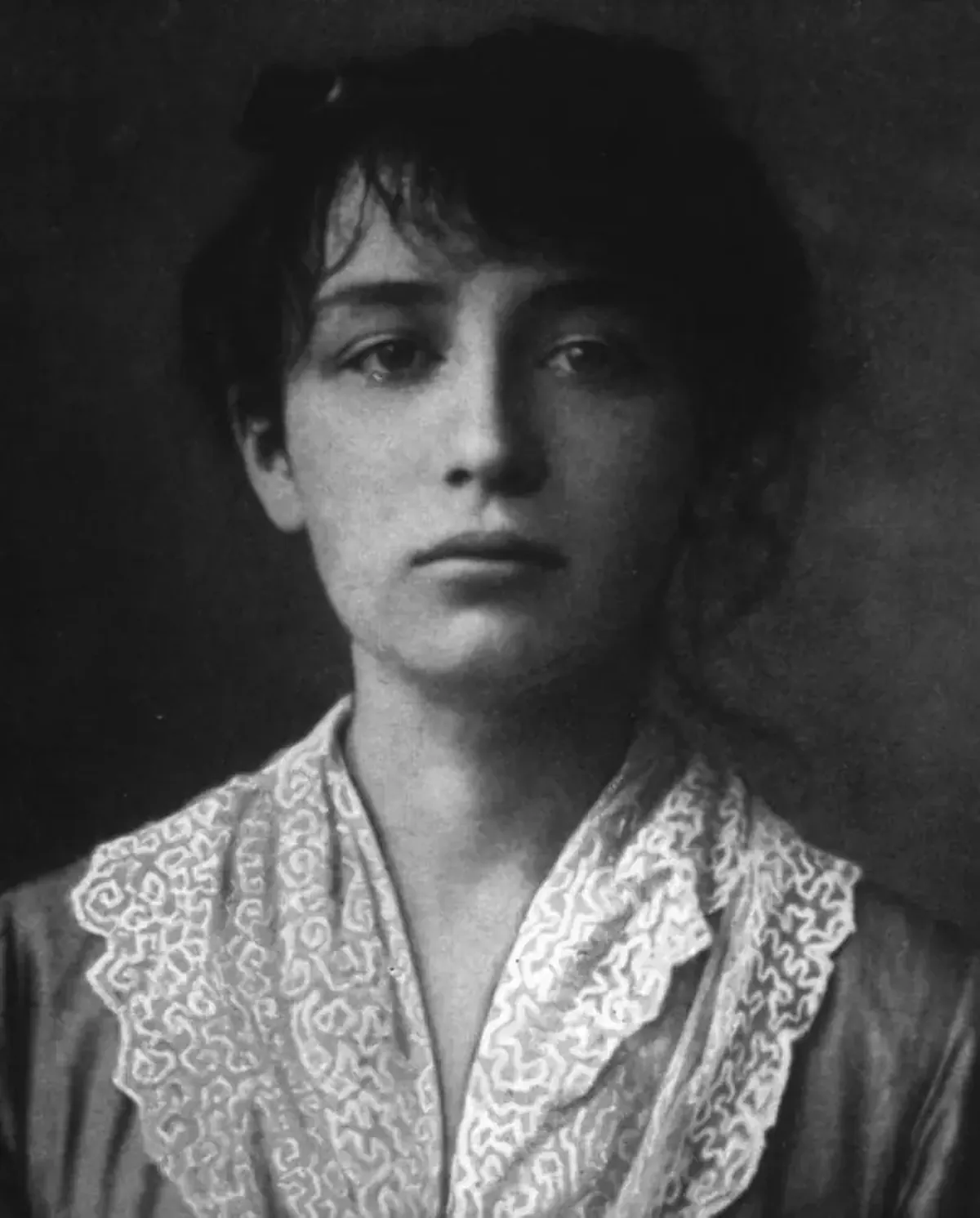
Camille Claudel (1864–1943)
Rose Beuret remained at Rodin’s side throughout his life, despite his affairs. In addition to numerous relationships with models and students, Rodin said he had “spent seven years with a wicked genius,” the Marchioness de Choisel (later a duchess), an American of French descent reportedly indifferent to art, taste, and fashion. He also had a nine-year relationship with his assistant Camille Claudel. Her relatives accused Rodin of driving her into a psychiatric hospital; she was confined there in 1913 and died there 30 years later.
In his later years Rodin lived with several mistresses, some of whom were known even to the French government. He sometimes settled accounts with companions by giving them his works. A year before his death Rodin bequeathed his artistic legacy to the state, and the Minister of Commerce personally arranged protections to prevent visitors from looting his estate.
