
 Gaby
GabyAdani Green Energy Limited (AGEL) will build a massive wind and solar power plant. This clean-energy company is a subsidiary of the Adani Group, the country’s largest coal importer and a leading coal producer. The renewable-energy division is managed by Sagar Adani, the nephew of Gautam Adani, the group’s owner and the richest person in Asia with a personal fortune of over $100 billion.
Sagar Adani told CNN that the power plant will be the largest in the world — five times bigger than Paris and visible from space. It will be located in the western state of Gujarat, covering an area of about 520 square kilometers (200 square miles). Construction is expected to cost $20 billion and take about five years to complete.
The project will transform a barren salt desert into one of Earth’s largest sources of clean energy. It will be the world’s largest renewable energy park and is expected to meet the electricity needs of 16 million Indian homes.
Moreover, this facility will be crucial for India’s efforts to reduce environmental pollution and achieve its climate goals. The park will help meet the energy needs of the world’s most populous country and a rapidly growing economy.
Coal still supplies about 70 percent of India’s electricity.
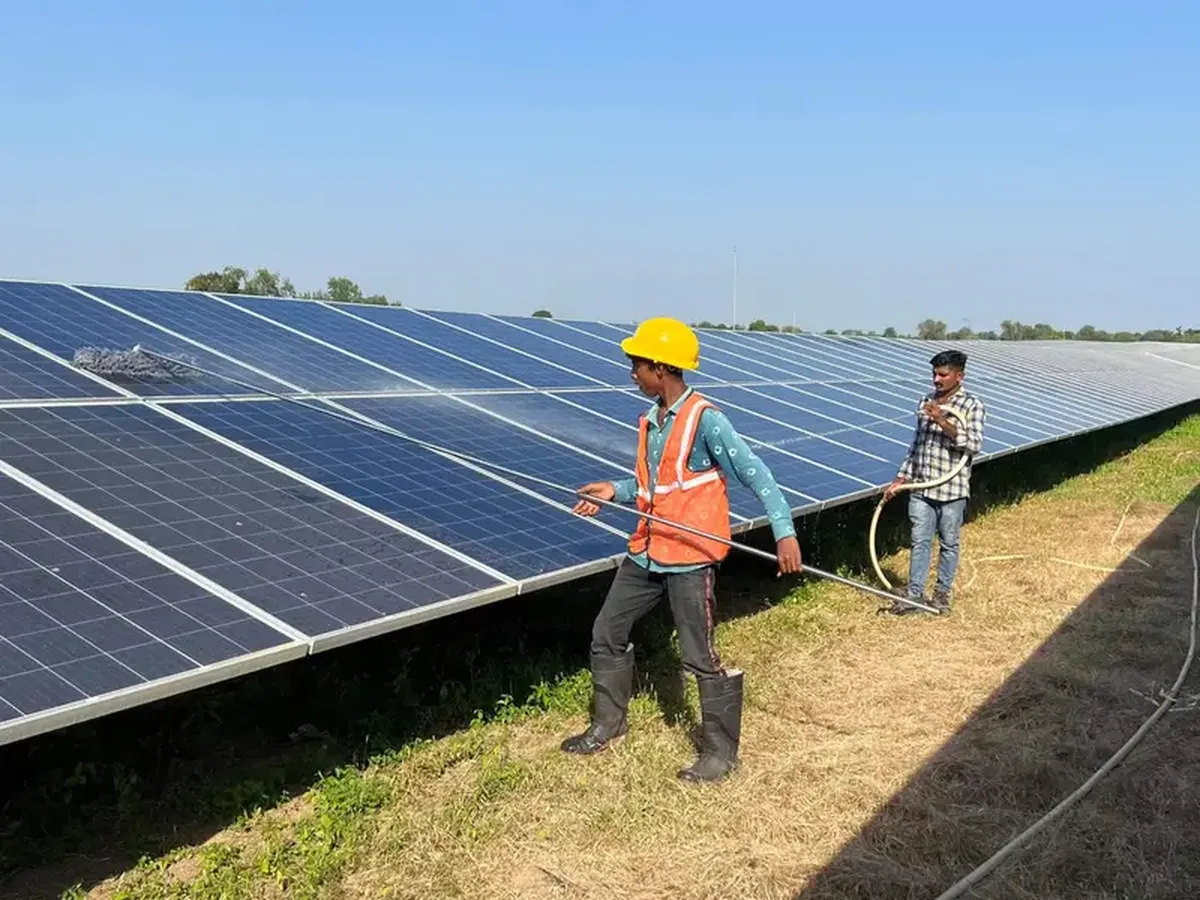
Why is the new giant power plant so important?
AGEL says the clean-energy park will be located near the India–Pakistan border. “The region is so vast that there is no wildlife, vegetation, or housing. There is no better alternative for using this land,” Sagar Adani said.
Over the next decade, the company plans to invest $100 billion in the shift from coal to clean energy, directing about 70 percent of that toward renewable sources.
The Adani Group’s move to clean energy comes as India has set ambitious climate targets. Prime Minister Narendra Modi hopes renewables like solar and wind will supply 50 percent of India’s energy by the end of this decade. He has also pledged that India will reach net-zero emissions by 2070, decades later than many developed countries.
Experts say electricity demand in the country will continue to rise year after year. Economic growth and a rapidly expanding urban population will drive mass construction of housing, offices, shops, and other facilities.
Demand is expected to grow due to rising living standards and climate change. Forecasts project that by 2050, electricity demand in India for household air conditioners alone will exceed total energy consumption across all of Africa.
Therefore, the country cannot rely solely on fossil fuels to meet its needs without risking catastrophic environmental consequences.
Sagar Adani
A spoonful of tar.
Adani Group is not only one of the largest developers and operators of coal mines in India; it also manages the controversial Carmichael coal mine in Australia, which has faced fierce opposition from environmental activists. Activists have called the mine a ‘death sentence’ for the Great Barrier Reef and warned about its climate impacts.
Tim Buckley, director of Sydney-based Climate Energy Finance, says Gautam Adani is trying to sit on two chairs at once. “It would be much better for India if the company directed 100 percent of its efforts and resources toward developing low-cost, zero-emission technologies,” Buckley said.
