
 Carlos Solis
A frittata isn’t just an omelet — it’s an Italian egg dish you cook in two stages: brown it on the stove, then finish it in the oven or under a lid. The key difference from a classic omelet is simple: you don’t flip or stir a frittata. Brown the bottom in the skillet, then finish the top without turning it over. If you leave a spinach frittata on the stove too long, you’ll end up with fried eggs; if you skip the stove step and put it straight in the oven, the texture won’t be right. For a traditional round frittata, use a 24–26 cm skillet (about 9½–10¼ inches) with a nonstick surface and an ovenproof handle. This Mediterranean favorite accepts many fillings, including cheese, herbs, vegetables, or meat, and you slice it like a pie for serving.
Ingredients for Spinach and Cheese Frittata (serves three to four):
- eggs – six
- fresh spinach – 100–120 g (about 3.5–4.2 oz); or frozen – 150 g (about 5.3 oz)
- cheese (Parmesan, feta, or mozzarella) – 60–80 g (about 2.1–2.8 oz)
- yellow onion – one, or leek – two to three stalks
- garlic – one to two cloves
- olive oil or butter – one to two tbsp
- salt, black pepper, nutmeg – optional
You can also add other herbs (basil, parsley), cherry tomatoes, or red pepper flakes for variation.

Which cheese works best?
You can choose different cheeses and get noticeably different results.
- Parmesan or Grana Padano – produce a golden top and a salty umami bite. This is the classic choice.
- Feta – doesn’t melt completely, stays in chunks, and adds a creamy tang. It pairs nicely with spinach.
- Mozzarella – melts and stretches but releases moisture. Choose low-moisture mozzarella (the kind for pizza), not balls packed in brine.
Cooking — two steps you shouldn’t swap
- Whisk the eggs with salt and your favorite spices in a deep bowl, but don’t whip them into a foam.
- Grate the cheese on a coarse grater, or crumble the feta with your hands.
- Pre-cook the spinach: heat the skillet, add the oil, add the clean spinach leaves, and sauté two to three minutes until the leaves reduce in volume.
- Pour the beaten eggs over the spinach. Do not stir the mixture.
- When the edges have set but the center still jiggles, lower the heat to the minimum, cover the skillet, and cook five to seven minutes until the eggs hold. Sprinkle the cheese about three minutes before the end so it softens but doesn’t burn. Alternatively, transfer the skillet to a 180–190°C (350–375°F) oven for eight to 10 minutes to finish the center and get a nice golden top.
For flavor variations, add sautéed tomatoes or young potatoes.

Two ways to finish a frittata without an oven
If you don’t have an oven or don’t want to use it, you can finish the whole frittata on the skillet in two ways. Both require low heat so the eggs cook through evenly without burning the bottom.
- Cover method: after pouring the egg mixture over the cooked filling, reduce the heat to low, cover the skillet, and cook five to seven minutes until the eggs set completely. Add the cheese about three minutes before the end.
- Flip method (Italian style): cook the frittata under the lid until the top becomes semi-liquid. When the bottom is well browned and the frittata releases from the pan, place a large flat plate over the skillet, hold the plate, and invert the skillet so the frittata lands on the plate. Slide the uncooked side back into the skillet, sprinkle the cheese, and cook under the lid one to two minutes.
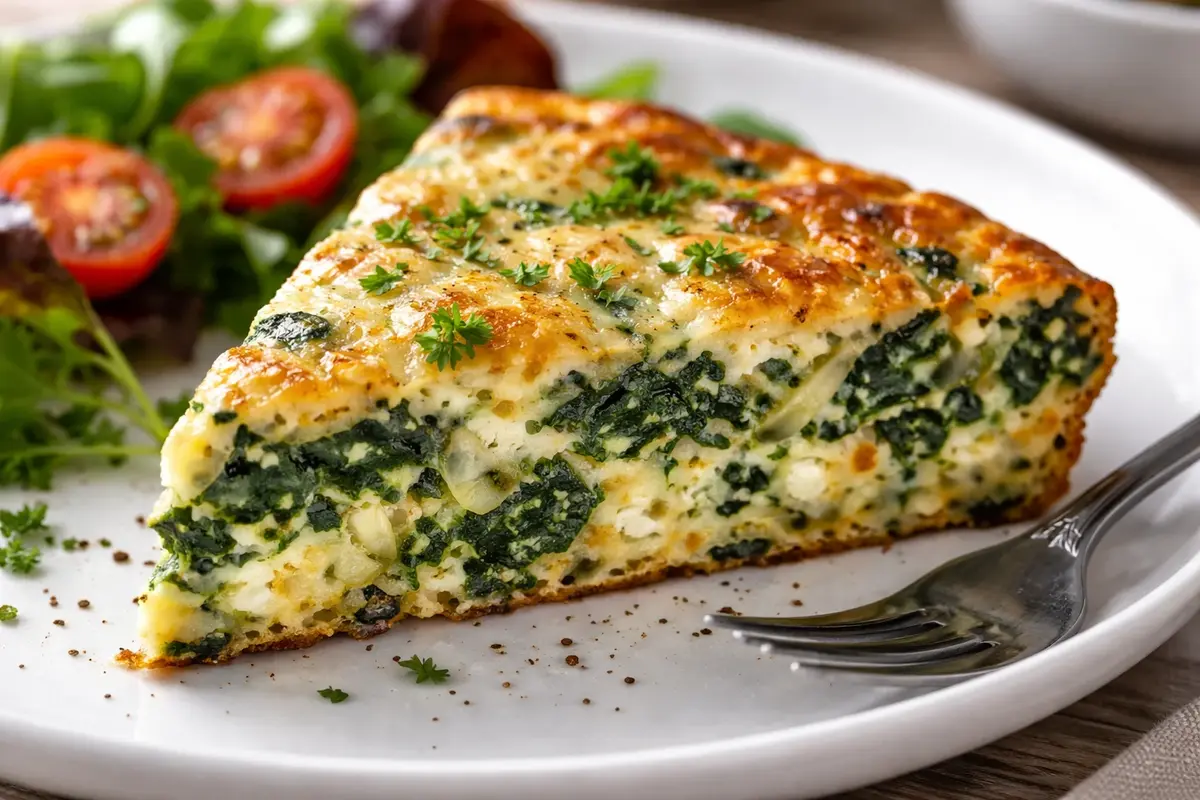
Tips
- Don’t add raw fresh spinach to the eggs – sauté it first to evaporate moisture. If you use frozen spinach, squeeze it dry in a towel before cooking.
- Mix the eggs with a fork and salt and pepper; don’t beat them into a foam. The frittata should stay firm, not airy.
- Move the frittata to the oven when the edges have set but the center still trembles; transferring at this moment prevents a fried-egg texture.
- Add the cheese about three minutes before the end so it softens without burning.
Frequently Asked Questions about Spinach and Cheese Frittata
When should I transfer the frittata to the oven?
Transfer the frittata to the oven when the edges have set and the center still jiggles; don’t wait for the center to fully firm up on the stove. That transfer moment is crucial to avoid a fried-egg texture.
What oven temperature and time does the recipe call for?
Set the oven to 180–190°C (350–375°F) and bake eight to 10 minutes until the center fully sets.
Can I use frozen spinach instead of fresh?
Yes. Thaw the frozen spinach in the microwave or overnight in the fridge, then wrap it in cheesecloth or a clean kitchen towel and squeeze out as much liquid as possible. Sauté the squeezed spinach one to two minutes in a hot skillet with a little oil or butter to evaporate remaining moisture, then pour the egg mixture over it and proceed as usual.
How long does a cooked frittata keep?
Store a cooled frittata in an airtight container in the refrigerator for three to four days. To freeze for longer storage (up to two to three months), wrap individual slices in parchment and place them in a freezer bag. Reheat slices on the skillet, in the oven, or in the microwave.
