
 Gaby
GabyRust is a constant threat to iron, which oxidizes easily in air and water. Even steel—a hard alloy of iron and carbon—rusts easily. However, stainless steel, as its name suggests, does not rust. So what is its secret?
In simple terms, stainless steel’s chemical composition prevents oxygen in the air and water from reaching the iron in the alloy, stopping unwanted oxidation reactions.
Ordinary steel rusts when iron reacts with oxygen, forming iron oxide. Although rust is usually not harmful to humans, it can severely corrode iron.
Ordinary steel is an alloy made up of about 99 percent iron and 0.2 to 1 percent carbon. In contrast, stainless steel typically contains 62 to 75 percent iron, about 1 percent carbon, and at least 10.5 percent chromium. Stainless steel also contains a few percent of nickel, which makes it stronger and easier to work with.

Chromium is the key to the corrosion resistance of stainless steel
Materials scientist Tim Collins told Live Science that chromium reacts with oxygen in air and in water to form a thin layer of chromium oxide (Cr2O3) on the metal’s surface. This layer prevents oxygen from reaching the iron in the steel and forming rust.
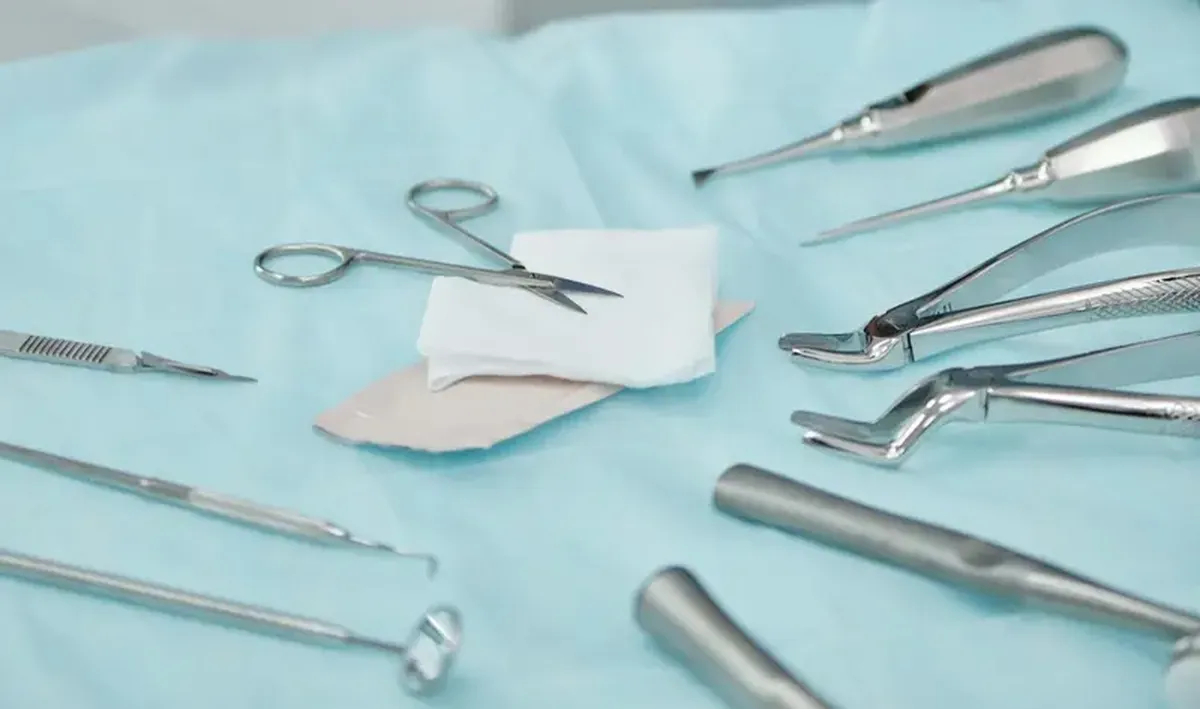
The Cr2O3 layer on stainless steel is only a few nanometers thick, making it invisible. The layer can self-repair if it is damaged. It is also inert, meaning it does not react chemically with other substances, and it doesn’t leach from the metal’s surface. Collins said these properties are why stainless steel is suitable for food preparation, surgical instruments, and other hygienic uses.
A serendipitous discovery
Stainless steel was invented in 1912 by English metallurgist Harry Brearley, who was studying steel alloys that would resist corrosion in gun barrels.
Brearley created an alloy of iron, carbon, chromium, and nickel, but it wasn’t suitable for gun barrels, Collins recounted. He tossed the leftover alloy into his backyard, and a few weeks later he noticed the shiny metal had not rusted. That observation helped him develop stainless steel—a material introduced to the world in 1915.
Stainless steel is valuable and widely used
Collins said that stainless steel currently accounts for about 4 percent of the roughly 2 billion tons of steel used worldwide each year.
At the same time, stainless steel is more complex and expensive to produce. Its cost is usually three to five times higher than regular steel. Adding special alloying elements (for example, molybdenum for underwater applications) can make certain stainless grades even more expensive.
As a result, ordinary steel is used in most cases where high corrosion resistance isn’t required. To improve rust resistance, standard steel can be coated with paint or another protective layer.
Today, Collins says, stainless steel is used in more areas than ever before.
Kanta Shelke, a food expert at Johns Hopkins University, said stainless steel has many advantages over alternative materials. She said it resists corrosion from food acids and cleaning agents, doesn’t contaminate food, and is durable and stronger than aluminum. Stainless steel’s nonporous surface is also easy to clean and disinfect.
