
 Gaby
Gaby
In 2022, Australia released a two-dollar coin featuring honeybees. That choice echoes a similar idea from about 2,400 years ago in the Kingdom of Macedon, where a silver obol showed a bee on one side. Across centuries, the link between honey and money has surprisingly persisted.
A recent study looked at bees through the lens of numismatic history and proposed a scientific explanation for why our brains might naturally connect honey-producing insects with the idea of value.
What is currency and why is it important?
Money preserves value and serves as a medium of exchange for goods and services. Coins are a durable form of money, unlike paper cash.
Since ancient times, coins have played a central role in many communities by making trade more efficient. Their durability also turns them into useful time capsules.
Ancient Malta was renowned for its honey. A modern three-milli coin (1972–81) commemorates that history with an image of a bee and honeycombs. According to the informational card issued with the coin set, the design symbolizes the fact that honey was used as currency in Ancient Malta.
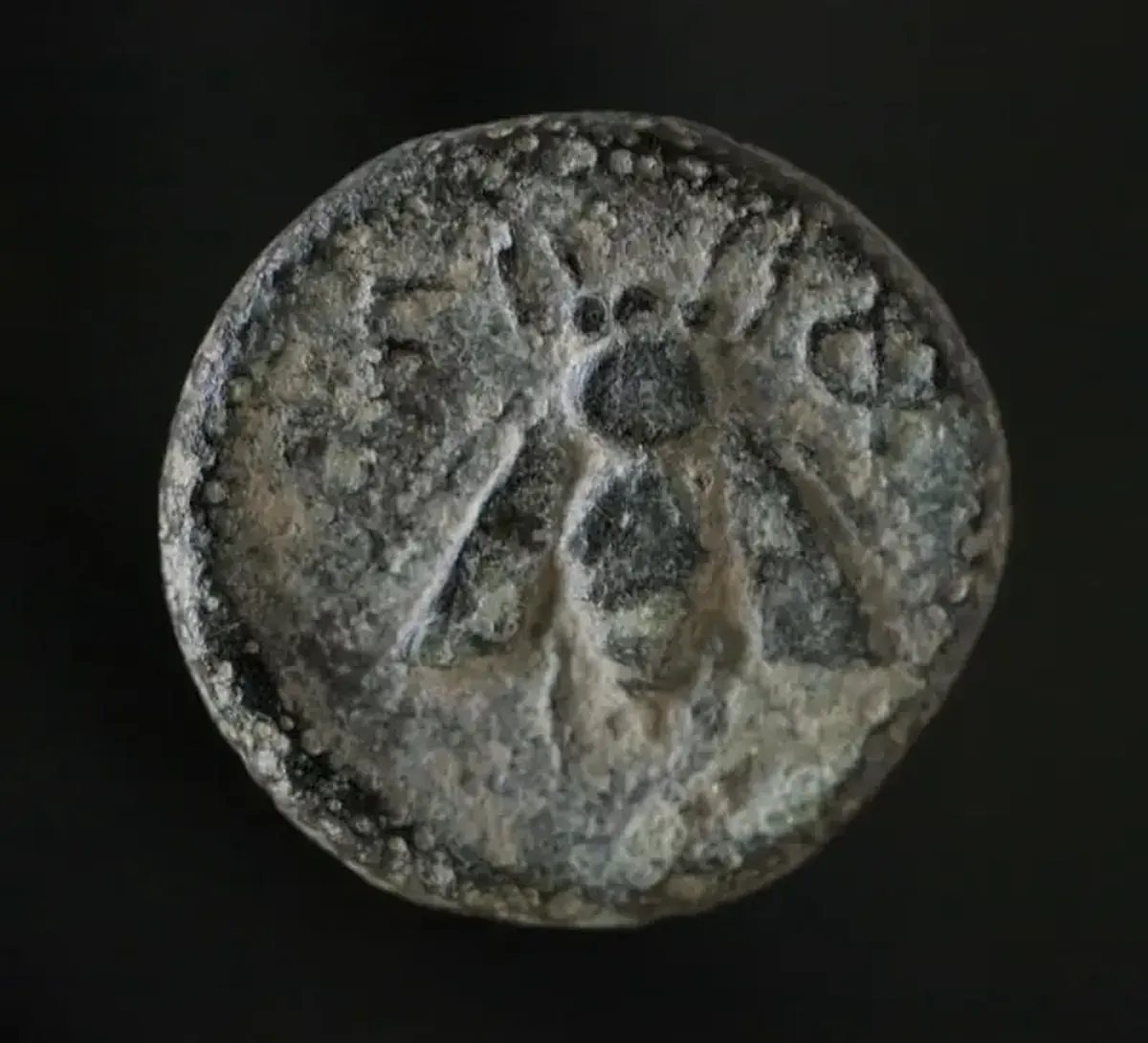
In Ancient Greece, bees appeared on some of the earliest coins minted in Europe. For instance, they appear on a silver Greek obol struck in Macedonia between 412 and 350 B.C.
Bees are also depicted on coins minted elsewhere in the ancient Greek world, such as a bronze coin struck in Ephesus and dated between 202 and 133 B.C.
The use of bees on ancient coins continued for centuries, including widely circulated bronze pieces. Researchers are still discovering new varieties.
Why do bees appear on coins?
One way to approach the question is through neuroaesthetics, the study of how brain processes shape our tastes. From that angle, honey’s sweetness signals high calories and triggers positive neural responses tied to bees and honey. Primatologist Jane Goodall once suggested that obtaining high-calorie food from honey may have been an important step in the cognitive development of primates.
 Thus, our brains may be predisposed to favor bees because of their association with the sweet taste of honey. The early use of these honey-producing insects on coins could have served as a clear link between a known store of value (honey) and a new form of currency—coins.
Bees on modern coins
The bee as a design element has persisted from ancient times to the present. A honeybee on a flower appears on a series of bronze 10-cent coins issued in Italy between 1919 and 1937.
Recently, a 20-cent coin from the Pacific nation of Tonga featured 20 honeybees flying out of a hive. That coin was part of a series initiated by the United Nations Food Mission to promote sustainable agriculture and culture worldwide.
 Bees are crucial because their pollination supports about one-third of the world’s food supply, a service valued at more than $200 billion a year. However, they face threats from climate change and other environmental pressures.
Bees on coins today and in the future
Public awareness of bees and environmental sustainability may be driving current interest in bee-themed coins. The variety of countries that have used bees on coinage suggests people have long valued the connection between honey-producing insects and their own prosperity.
In Australia, the 2022 two-dollar coin featuring the honeybee is part of a series designed by the country’s Royal Mint. In 2019, the Perth Mint in Western Australia also released coins and stamps honoring local bee species.
Even as interest in cash declines, bee coins remain popular. That imagery is likely to continue appearing in coin design as long as coins are still in circulation.
